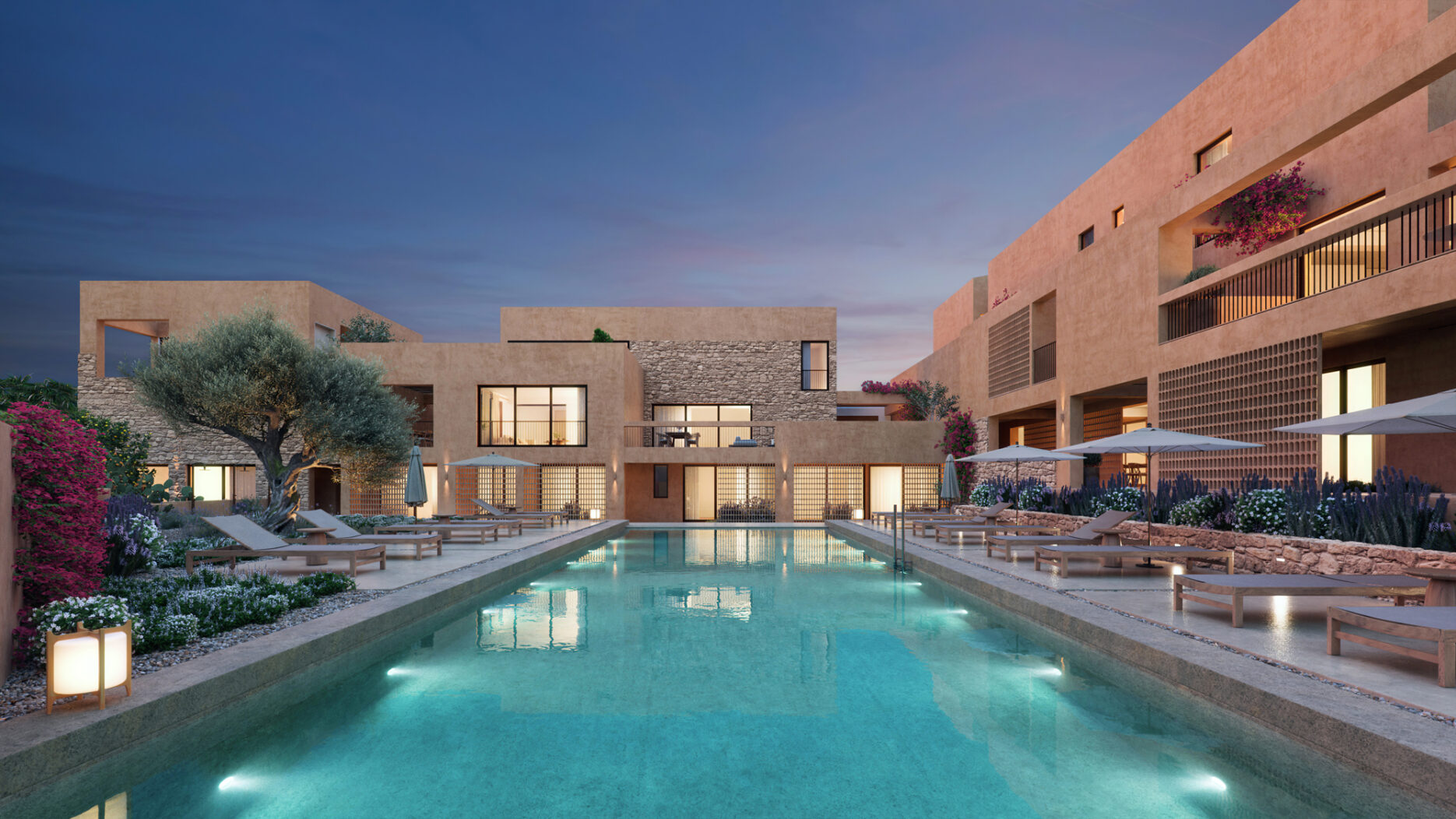
Building in Crete looks familiar on brochures—until you start verifying the things that actually decide comfort, running costs, maintenance effort, and long-term value. Crete has a different climate profile (summer heat load, coastal humidity), different infrastructure realities (water storage, off-grid wastewater solutions), and a wider quality spread between entry-level builds and premium projects than many buyers expect.
This guide explains—practically and document-first—how to assess quality when building in Crete: what was commonly “standard” 5–10 years ago, what premium projects typically deliver today, and which questions you should ask (ideally in writing) before signing anything.
Kaste-Desk note: We work process-first: structure decisions, reduce risk, coordinate specialist partners. For the overall buying pathway in Greece, see: How to buy property in Greece – guide.
Key terms (so everyone means the same thing)
- Thermal performance: measures that reduce winter heat loss and summer overheating (insulation, glazing, shading, thermal bridges).
- Moisture management: controlling humidity and water ingress (waterproofing layers, detailing, dehumidification strategy, ventilation logic).
- Thermal bridge: a junction/detail that conducts heat disproportionately → condensation/mould risk and comfort loss.
- Airtightness: limiting uncontrolled leakage paths → important for comfort, energy use, and moisture control.
- Summer comfort: shading + thermal mass + night ventilation, plus dehumidification/cooling where needed.
- Septic system: on-site wastewater solution (tank/compartments/treatment depending on design) → sizing and maintenance are critical.
- Thermal break (windows): reduced heat transfer in frames (especially important with aluminium systems).
- Load management: controlling major electrical loads (heat pump, hot-water cylinder, pool equipment) to maximise PV self-consumption.
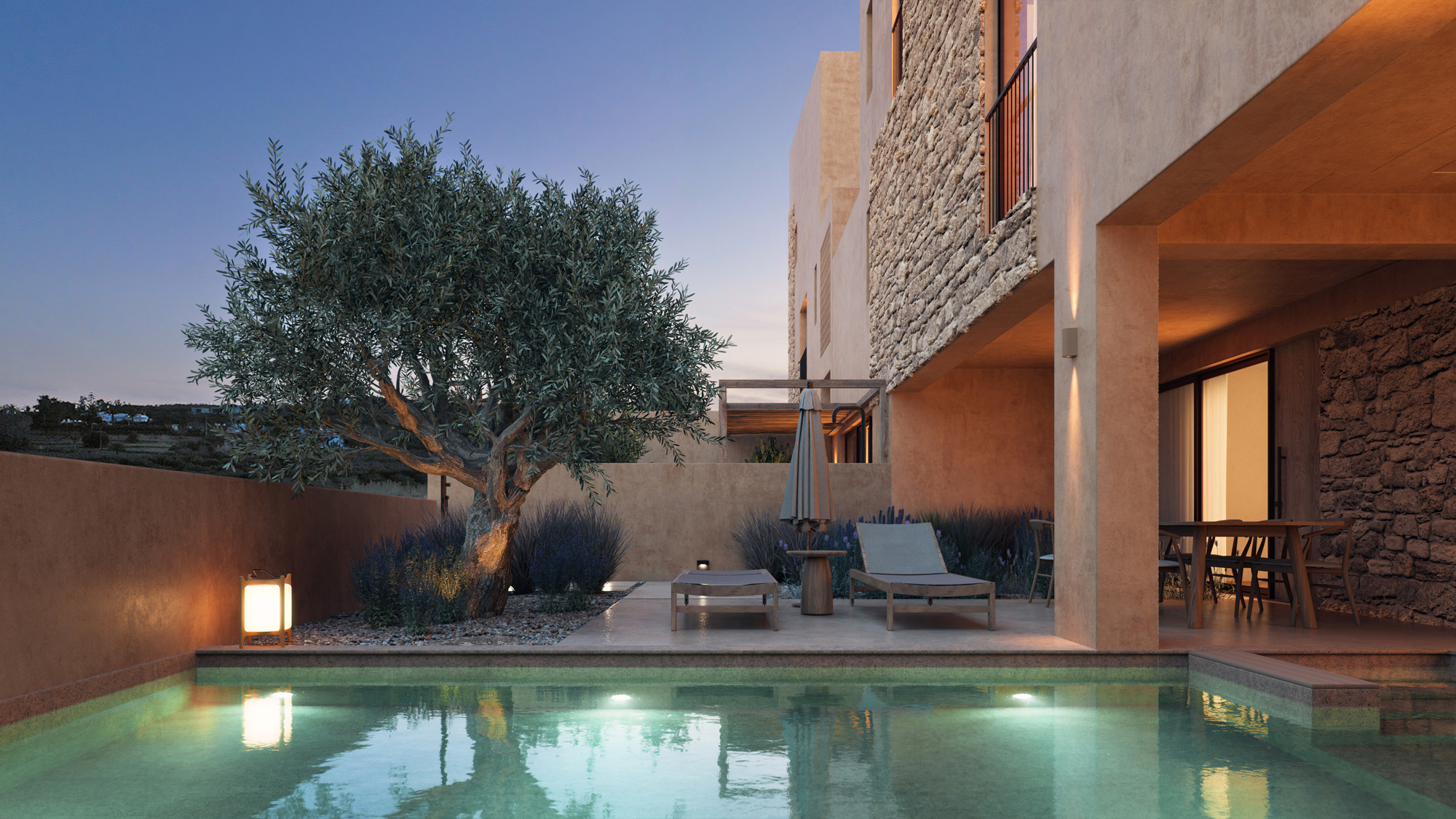
Building in Crete: Why climate and seasonal use change everything
Compared to many Northern European and North American markets, building in Crete typically means:
- much higher summer heat load (solar gains, overheating risk),
- different moisture profiles (coastal air, salts, seasonal occupancy changes),
- different infrastructure assumptions (water tanks, pressure fluctuations, septic solutions outside dense sewer networks),
- different usage patterns (holiday rental, seasonal vacancy, rapid re-occupancy).
If rental income is part of your strategy, treat legal and tax questions as part of “build quality” from day one: Holiday rentals in Greece – new regulations and Taxation of income from holiday properties in Greece. Transaction cost overview: Purchase costs in Greece.
What is “EU-wide mandatory” for new builds—and what is not
Many buyers hear “EU standard” and assume consistent build quality. In reality, EU rules mainly set frameworks for energy performance and product conformity—while design choices, inspections, enforcement, and workmanship quality vary nationally and locally.
1) Energy performance framework (EPBD)
EU guidance describes that new buildings across the EU have been required to meet nearly-zero energy building expectations, and that the direction of travel moves toward zero-emission buildings as the new standard for new builds. (Energy)
Buyer takeaway: Don’t ask “Is it EU-standard?” Ask for the project’s specific energy documentation and which values are contractually guaranteed.
2) Construction products (CPR, CE marking, Declaration of Performance)
Under the EU Construction Products Regulation, many construction products covered by harmonised standards require a Declaration of Performance and CE marking. (Binnenmarkt & Industrie)
Buyer takeaway: Product conformity is useful—but it does not replace good detailing and correct installation (windows, waterproofing, insulation continuity).
3) Structural design (Eurocodes as a common design framework)
Eurocodes provide common structural design standards across Europe (e.g., EN 1990 as the basis of structural design). (Eurocodes)
Buyer takeaway: “Designed to Eurocodes” is a good sign—but you still need project-level structural documentation and a clear handover package.
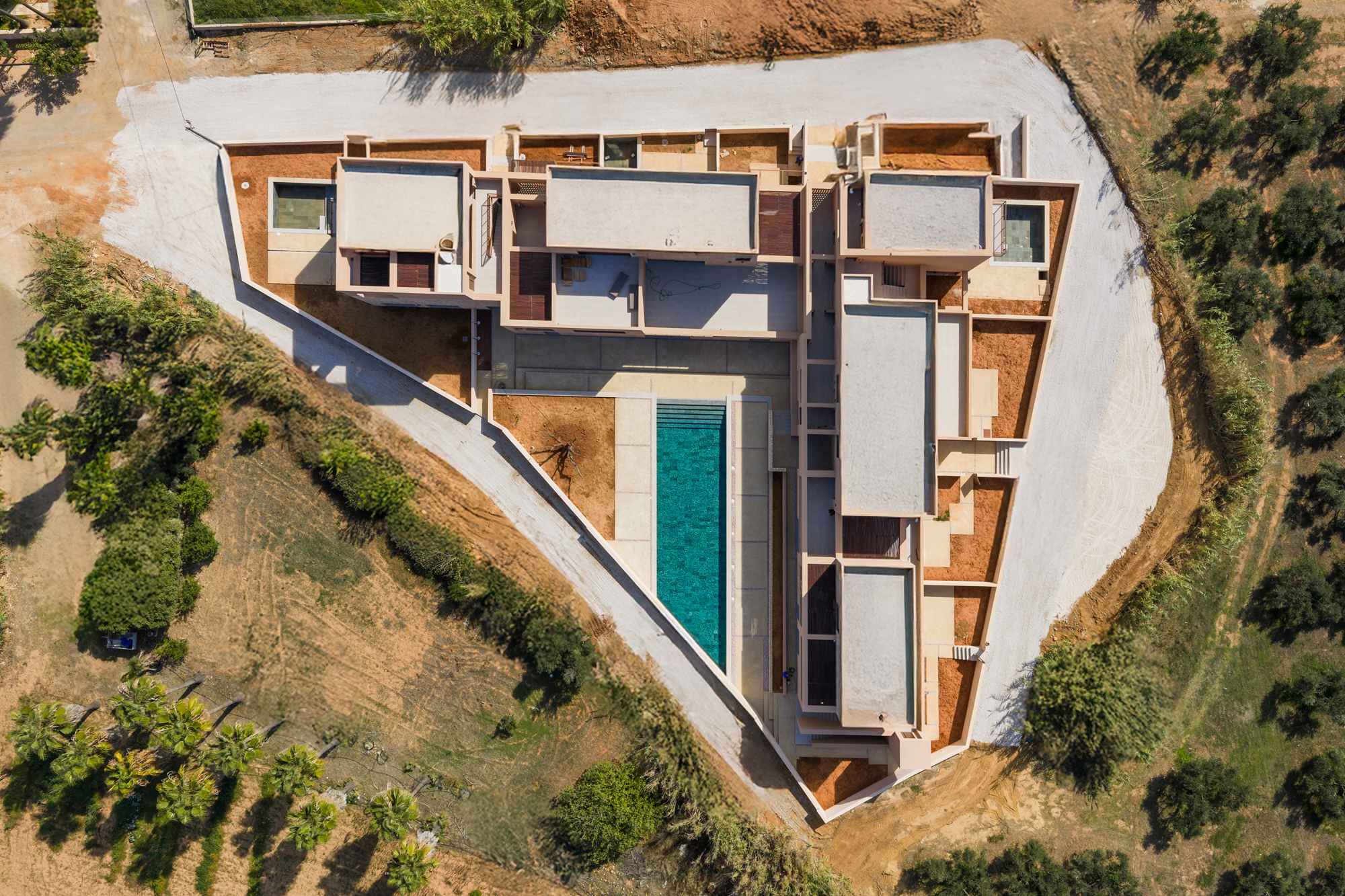
Building in Crete: What was commonly “standard” 5–10 years ago (often, not always)
This is not a blanket judgement—just recurring patterns many buyers encountered in mainstream projects:
1) Insulation & thermal bridges
- insulation applied selectively (e.g., roof yes, walls limited),
- thermal bridge junctions (slab edges, lintels, balconies) not consistently engineered,
- summer comfort treated as “add shutters later” rather than a full concept.
2) Sound insulation
- glazing without clearly specified acoustic performance,
- shutter boxes and tracks as weak points,
- installation noise handled functionally rather than acoustically optimised.
3) Windows & glazing
- aluminium systems with basic thermal breaks (or none in lower tiers),
- double glazing common but not always optimised for solar control,
- airtightness details rarely documented.
4) Building services (heating/cooling/hot water)
- split AC units as the default solution (works, but comfort/humidity/noise/service vary),
- hot water via electric cylinder or solar thermal + cylinder,
- underfloor heating not consistently delivered, sometimes without transparent sizing logic.
5) Solar PV / batteries
- PV as an add-on, not a system,
- batteries rare,
- monitoring and load management uncommon.
6) Water & wastewater
- water tanks installed, but sizing and pressure system quality varied,
- filtration often basic,
- septic solutions present but documentation, access, and maintenance logic not always clear.
For a Crete-specific sustainability and value-protection perspective: Sustainable building in Crete.
Building in Crete today: Premium benchmarks—and how to recognise them
In high-quality projects (not entry-level builds), standards have professionalised significantly. Hallmarks include:
A) The building envelope as a system (not a list of materials)
- coherent insulation concept across walls/roof/critical junctions,
- documented thermal-bridge details (drawings, not just promises),
- strong window systems (thermal breaks + appropriate glazing),
- shading designed in (overhangs, pergolas, external screens/shutters).
How to recognise it: you receive build-ups, sections, and written specifications that are precise—ideally with product types/brands or “equivalent” definitions.
B) Services engineered for comfort, noise, and maintenance
- underfloor heating + heat pump (or well-designed hybrid systems),
- a humidity and cooling strategy (not only “install AC”),
- accessible technical room and service paths.
How to recognise it: sizing logic, data sheets, and a clear maintenance/service plan exist.
C) Energy as a managed system
- PV sized to match usage (owner-occupancy vs seasonal/rental profile),
- load management to increase self-consumption,
- monitoring (production/consumption alerts, basic transparency).
D) Water & wastewater treated as purchase-critical systems
- tank sizing, pressure system, filtration, and hot-water logic documented,
- septic/treatment solution properly sized and serviceable.
Practical modules: what to check (and where projects fail)
1) Thermal performance & moisture management (insulation, bridges, airtightness, summer comfort)
What premium projects do well:
- summer-first thinking: shading + solar control + thermal mass + ventilation strategy,
- thermal bridges addressed in drawings and junction details,
- airtightness and penetrations detailed (plumbing/electrical/AC),
- humidity acknowledged (dehumidification where needed).
Common failure modes:
- good insulation, weak junctions → condensation at internal edges,
- “we’ll add shading later” → excessive cooling demand,
- details copied from other climates without adapting to coastal humidity and seasonal use.
Buyer checkpoints:
- written envelope build-ups (wall/roof/slab)?
- key junction details for windows/slab edges/lintels?
- explicit summer comfort strategy (not vague wording)?
2) Sound insulation (windows, shutters, location, installations)
In Crete, sound performance is often location-driven: seasonal activity, restaurants, access roads, wind exposure, neighbouring pools/plant rooms.
Buyer checkpoints:
- declared acoustic performance for glazing,
- shutter/screen detailing (no “acoustic leaks”),
- external units (AC/heat pump) placed and decoupled sensibly.
3) Heat pump & underfloor heating (sizing, noise, service)
Underfloor heating can be excellent in Crete—especially for shoulder seasons and stable comfort—if engineered correctly.
What “good” looks like:
- zoning (day/night, bathrooms separate),
- low flow temperatures,
- clear control strategy and accessible manifolds,
- sensible placement and vibration isolation for outdoor units.
Buyer checkpoints:
- who sized it and what assumptions were used?
- where are outdoor units located and how is noise handled?
- what is the service plan and who supports it locally?
4) Solar PV, batteries, load management, backup (where it makes sense)
PV can be highly attractive in Crete—but only as a system.
Good practice:
- PV sized to real usage profile,
- daytime loads shifted intelligently (hot-water cylinder/heat pump timing),
- batteries only when the profile justifies them,
- backup offered as an option (not sold as default without clarity).
Buyer checkpoints:
- self-consumption strategy and monitoring included?
- allowances for future expansion (space, conduits, panel capacity)?
- clear explanation of what “backup” actually powers?
5) Water (tank sizing, pressure, filtration, hot water)
Water conditions are not uniform across Crete; seasonal and local differences matter.
What to expect in premium projects:
- tank size justified for occupancy and rental peaks,
- quiet, stable pressure system with service access,
- filtration defined with replacement intervals,
- hot-water system sized and maintainable.
Buyer checkpoints:
- tank volume and realistic autonomy estimate,
- filtration stages and maintenance plan,
- technical room drainage and access.
6) Wastewater (septic system / treatment, sizing, maintenance)
Wastewater is one of the most common “later cost surprises” when it isn’t checked early.
What you want:
- sizing based on actual occupants + rental peak usage,
- service access and clear responsibilities,
- documentation (type, volume, maintenance schedule).
Common mistakes:
- under-sizing,
- poor service access,
- unclear venting/pipe gradients,
- no realistic maintenance cost/interval guidance.
7) Earthquake resilience in Crete: a key technical due-diligence point
Crete is in a seismically active region. When building in Crete, earthquake resilience is not a marketing word—it’s structural design + execution + documentation.
What premium projects typically provide:
- a structural concept engineered for seismic loads,
- clear load paths and detailing (reinforcement logic, connections),
- documented structural package for handover.
Buyer checkpoints:
- named structural engineer responsible?
- structural documentation available (and consistent with the built result)?
- changes on site (openings, wall shifts, added loads) documented and approved?
Table: Assumptions buyers bring vs Crete reality (and what to request)
| What buyers assume | Crete reality | What to request (documents/tests) |
|---|---|---|
| “Energy-efficient” is automatically defined | Claims vary by project tier | written specs + energy docs + guaranteed values |
| “Double glazing” means comfort | Frame type + glazing + installation decide outcomes | window system + glazing spec + junction details |
| Insulation alone prevents overheating | Shading and solar control are often the biggest lever | shading plan + solar control glazing + ventilation logic |
| Water is “like at home” | Tanks/pressure/filters can be essential | tank volume + pump/pressure spec + filter schedule |
| Wastewater is a small detail | Septic sizing/access/maintenance can become expensive | system type + volume + service access + schedule |
| “Quiet” is guaranteed by nice interiors | Location + external units + shutters can dominate | acoustic window data + outdoor unit placement plan |
| “Earthquake-safe” is a given | Needs structural design and documentation | named engineer + structural handover package |
| “EU standard” proves quality | EU provides frameworks, not uniform workmanship | project evidence, not slogans (specs + handover) |
Building in Crete: Copy-and-paste checklist — 15 questions for developers/architects
Copy block (email/WhatsApp template)
- Please send the written technical specification with envelope build-ups (wall/roof/slab).
- How are thermal bridges handled (slab edges, lintels, window junctions)? Can you share key junction details?
- Which window system (frame/thermal break) and which glazing specification are included?
- What is the summer comfort strategy (shading, pergola/screens/shutters, night ventilation, dehumidification)?
- How is airtightness handled around penetrations (plumbing/electrical/AC)?
- What is the heating/cooling concept (heat pump, splits, hybrid) and why was it chosen?
- If underfloor heating: how is it zoned and sized (controls, flow temperatures, bathrooms)?
- Where are outdoor units located and how is noise/vibration managed?
- How is hot water produced (tank size, energy source, maintenance)?
- Solar PV: what size is planned and what is the self-consumption/load-management approach?
- Water: tank volume, pressure system, filtration stages, maintenance access—what exactly is included?
- Wastewater: septic/treatment type, volume, maintenance plan, service access—documented how?
- Seismic design: who is the structural engineer and what structural documentation is available for handover?
- Which energy performance documents/values will be provided and which values are contractually guaranteed?
- What handover package do I receive (as-built plans, data sheets, warranties, protocols) and who supports after-handover service?
What does quality cost—and where do entry-level builds usually cut corners?
Premium quality rarely comes from luxury finishes alone. The real value is in the “invisible layers”: junction detailing, waterproofing, thermal bridges, correct window installation, engineered services, noise control, maintainability, and the handover documentation that proves what was built.
Cost logic (no promises):
- Upgrading envelope and systems often sits in the mid single-digit to low double-digit percentage range of build cost—highly dependent on the starting level and detailing.
- The expensive part is remediation: moisture issues, under-sized water/wastewater, noise disputes, overheating, and rework in finished spaces.
Typical corner-cut zones (entry level):
- window installation details (great product, poor installation),
- thermal bridges and airtightness,
- shading postponed until “after completion,”
- technical room access and serviceability,
- septic sizing and access,
- a thin handover package (little that you can verify later).
How to compare projects fairly (brochures vs verifiable specs)
The key is verifiability: do you receive specifications you can check, or only marketing language? A well-structured exposé saves time and reduces misunderstandings: Professional exposés save time and nerves.
Also, compare “area” correctly—Europe handles this differently and it affects yield calculations: Residential area calculation in Europe.
For examples of premium project logic (as examples, not blanket standards): Sustainable new-build projects in South-East Crete and Long-Beach II Makrigialos (project example).
Macro context on location/value drivers: Crete in transition: infrastructure, tourism and property development (optional: New Kastelli airport).
Status date & disclaimer
Status: 18 Dec 2025
Disclaimer: This article is general information only and does not replace legal, tax, engineering, or technical advice. It is designed to help you ask the right questions and request the right documents.
10-point quick summary
- Building in Crete is mainly about climate, humidity, infrastructure, and documentation.
- Older mainstream projects often had weaker junction detailing and thinner documentation.
- Premium projects today are recognisable by coherent envelope design and written evidence.
- Windows are more than double glazing: frame thermal break + installation details matter.
- Shading is a core system—not decoration—and often the biggest lever for summer comfort.
- Heat pump + underfloor heating can work very well if properly sized and serviceable.
- PV is attractive, but only with load management and monitoring.
- Water storage/filtration and wastewater (septic) are purchase-critical systems.
- Earthquake resilience requires structural design and documentation—not slogans.
- “EU standard” is not a quality proof—request project-level documents and guarantees.
CTA
Use the 15-question copy block above as your standard outreach template.
If you want a structured review (project comparison, document checklist, risk prioritisation), you can reach us here: Contact / first consultation.
Crete overview: Crete / Greece landing page.
If you want a curated view of current developments: New-build overview.
FAQ: Building in Crete
- Is underfloor heating worth it when building in Crete?
Often yes for comfort in shoulder seasons. Quality depends on zoning, low flow temperatures, and correct sizing. - Are heat pumps too noisy in Crete?
Not necessarily. Noise is mainly location, decoupling, and operating mode—not marketing. - Can split AC replace a heat pump?
Sometimes yes, but humidity control, noise, serviceability, and long-term comfort vary widely. - What matters most for sound insulation?
Declared window performance, shutter/screen detailing, and the real-world location (seasonal noise sources). - Shutters/screens or more insulation—which matters more?
For summer comfort, shading and solar control are often the top lever. Best is a system: shading + envelope + ventilation/dehumidification logic. - How can a non-engineer spot thermal bridge risk?
Ask for junction details (window/slab edge/lintels) and a clear explanation of condensation risk management. - Do I need mechanical ventilation like in Northern Europe?
Not automatically. You do need a humidity/air-quality strategy suitable for seasonal use and coastal conditions. - Is solar PV financially attractive when building in Crete?
Often, yes. The deciding factor is self-consumption and monitoring, not “maximum size.” - Does a battery always make sense?
No—profile dependent. Seasonal vacancy can reduce value; evening loads or backup goals can increase value. - What does “backup power” actually mean?
It varies. Confirm switching method, which circuits are supported, and real-world limitations. - How big should the water tank be?
Depends on occupancy, rental peaks, and local supply. Request a justified sizing approach. - Which filtration is necessary?
Depends on water quality and goals. Ask for filtration stages and replacement intervals. - How often does a septic system need service?
System- and usage-dependent. Demand a maintenance schedule and cost range. - Typical septic mistakes?
Under-sizing, poor access, unclear venting, wrong gradients, and no maintenance logic. - Are new builds in Crete automatically earthquake-safe?
Only if structurally designed and executed accordingly. Ask for the responsible engineer and documentation. - Which earthquake-related documents should I request?
Responsible structural engineer, structural documentation for handover, and evidence of approved changes during construction. - Is “EU standard” a reliable quality statement?
Only partially. EU frameworks cover energy and product conformity, but they do not guarantee workmanship quality. (Binnenmarkt & Industrie) - What’s the most reliable way to reduce risk when building in Crete?
Written specs, verifiable documents, clear responsibilities, and a documented handover package—plus a structured process. Start here: [KI_LINK_6].



1 Comment
Add Yours →[…] the english article: https://kretakompass.de/en/2026/01/02/building-in-crete-what-international-buyers-must-know-about-ne… […]