
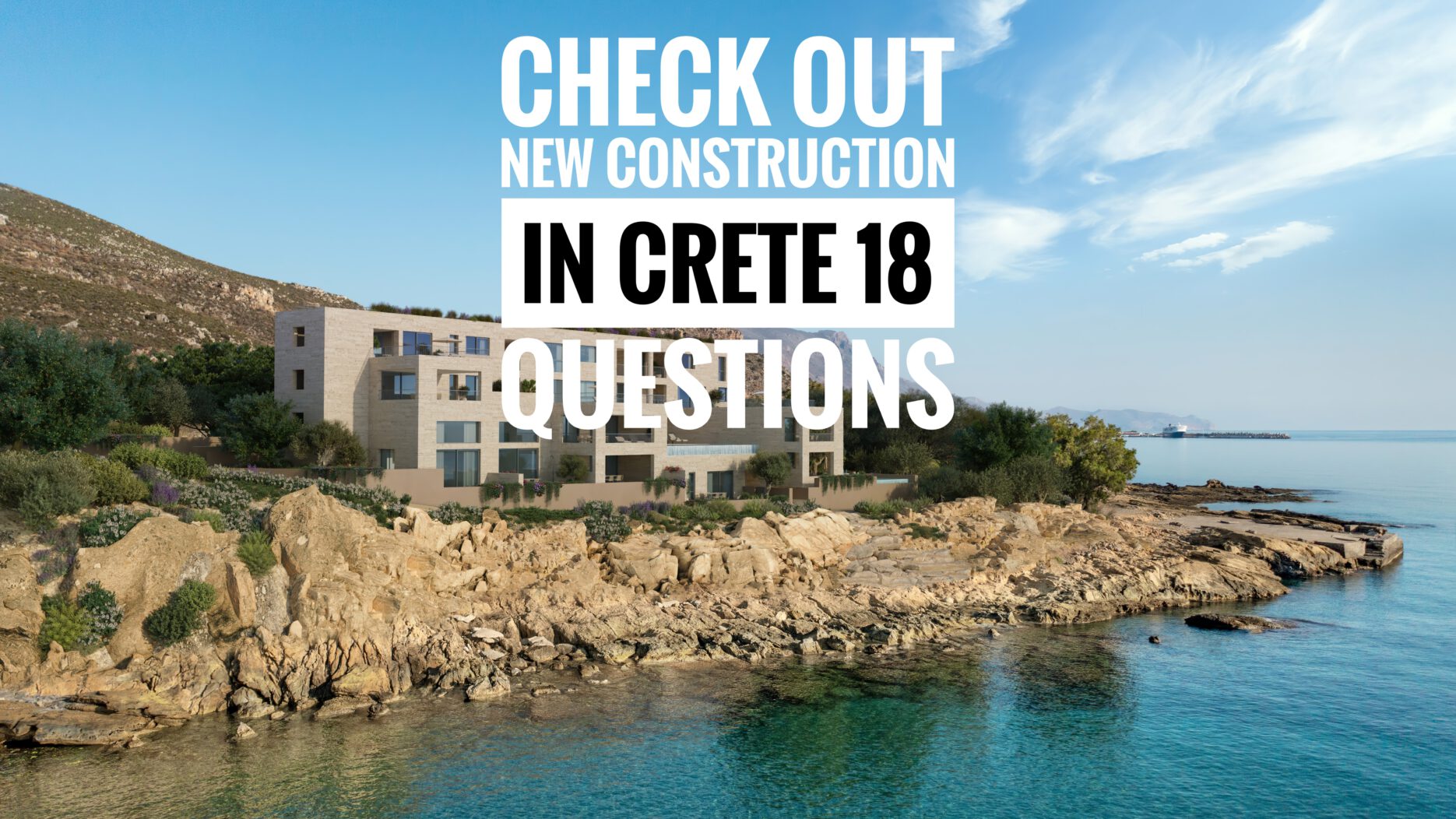
Check new build in Crete—this is exactly what this article helps you do. The biggest problems rarely start in the living room. They start with soil conditions, drainage, waterproofing details, legal structure, building permits, management rules and ongoing costs.
This post was sparked by a discussion in our Facebook community “Immobilien Griechenland” (Real Estate Greece), where buyers and practitioners shared what they would verify first—especially for new-build projects on Crete.
What you’ll get from this guide:
- what documents to ask the developer for,
- what is typically covered by your lawyer/notary/engineer in Greece,
- 18 practical questions that help you avoid expensive surprises.
Important note: This is practical guidance, not legal or tax advice. Always rely on qualified professionals for your specific case.
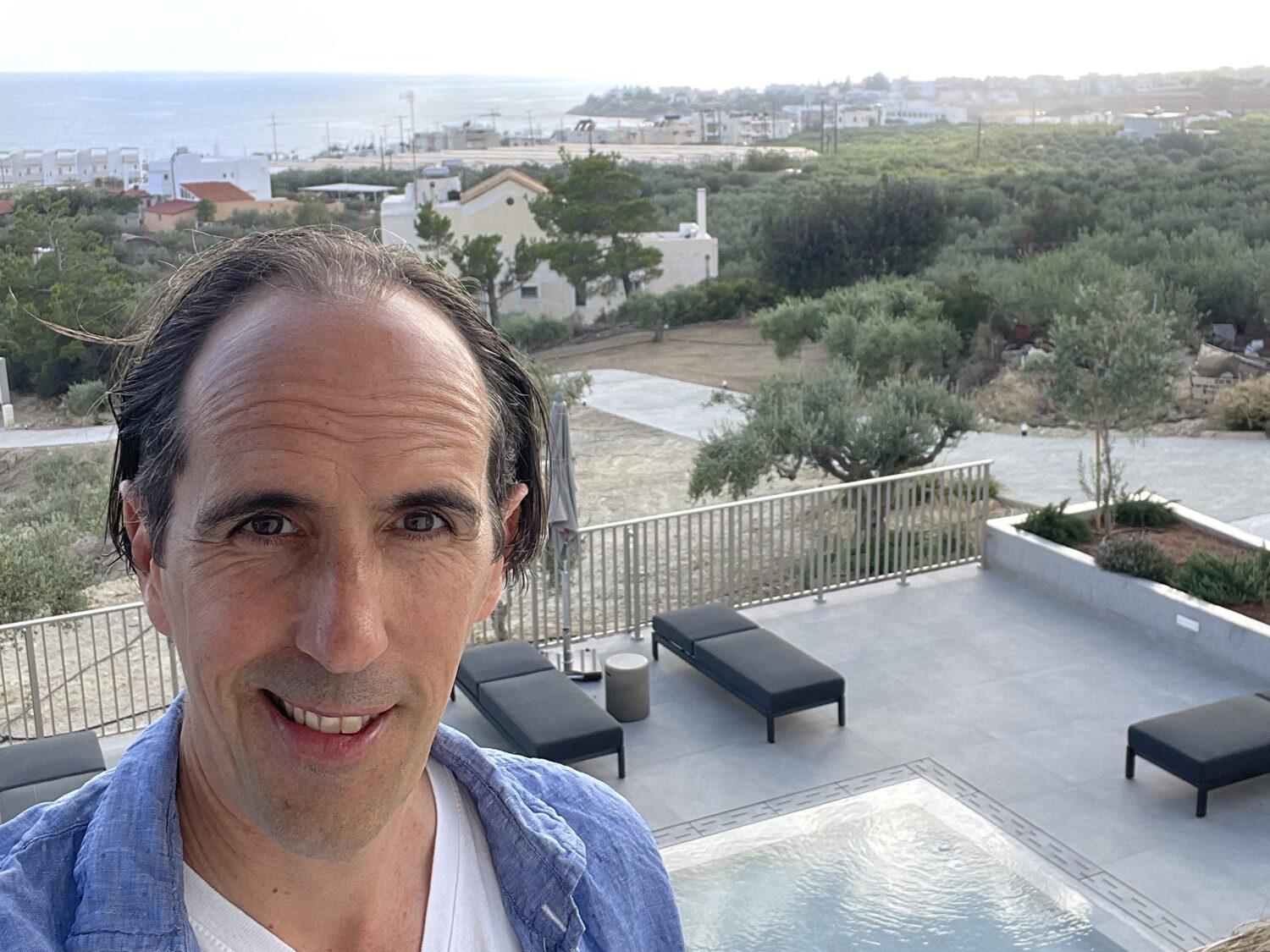
Check new build in Crete: Soil and geotechnics (often the dealbreaker)
One message from the discussion was crystal clear: if the ground is problematic, it can become expensive or permanently stressful. Many waterproofing issues can be improved later. The ground itself cannot.
Crete has many hillside locations. In some areas, developers create buildable platforms by adding significant fill material. That can be engineered correctly—but you should ask for evidence, not rely on optimism.
Practical takeaway:
If you want to check new build in Crete properly, put soil and geotechnics at the top of your priority list.
Check new build in Crete: Water, drainage and waterproofing (don’t underestimate extremes)
The second big risk cluster is water—often not sea water, but heavy rain, surface water, hillside runoff (including “hang water”), and unclear drainage routes.
Typical weak points in new builds:
- terrace and flat-roof junctions (waterproofing layers, slope, outlets)
- window and door installations (seals, flashing, wind-driven rain)
- parapets and roof-wall junctions (details at edges and transitions)
- drainage design: where does water go in an extreme event?
Rule of thumb:
If you smell damp indoors, see mould traces, or notice white crystalline salt deposits, the repair effort can quickly jump from “minor improvement” to “serious remediation”.
If you want to check new build in Crete with confidence, ask for clear drainage logic and waterproofing details—ideally in writing.
Check new build in Crete: Management, rules and running costs (especially in complexes)
In residential complexes you typically have two groups:
- owner-occupiers focusing on comfort and long-term value
- investors focusing on low operating costs and rental performance
This is not automatically a problem. It becomes a problem when responsibilities, budgets, reserve funds and decision rules are vague—leading to delayed repairs and sudden special contributions.
Practical takeaway:
The more “extras” (pool, lifts, shared gardens), the more crucial management, budgets, reserve funds and house rules become.
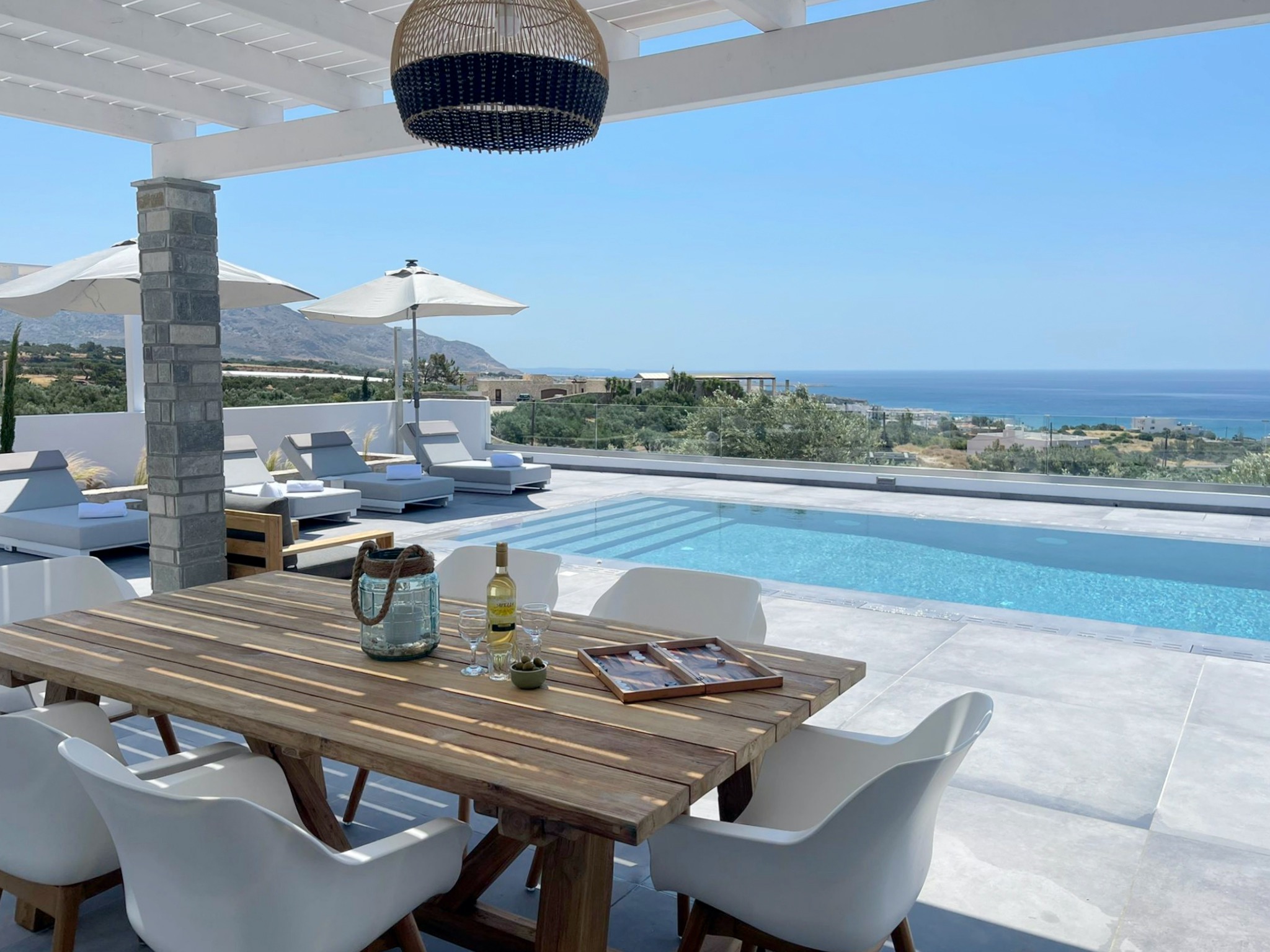
Daily-life reality beats brochures: location, healthcare, access routes, wildfire risk
International buyers often start with “sea view”. The discussion highlighted a more practical checklist that often determines whether a property is truly usable:
- healthcare access: doctors, pharmacies, and how far a hospital is in an emergency
- regular medication: reliability of supply and travel time
- infrastructure: shopping, road access, parking, winter practicality
- neighbourhood: year-round residents vs purely seasonal area
- wildfire risk: road access, escape routes, and how quickly you can leave by car
If you check new build in Crete for real use (not only holidays), these daily-life factors matter as much as interior finishes.
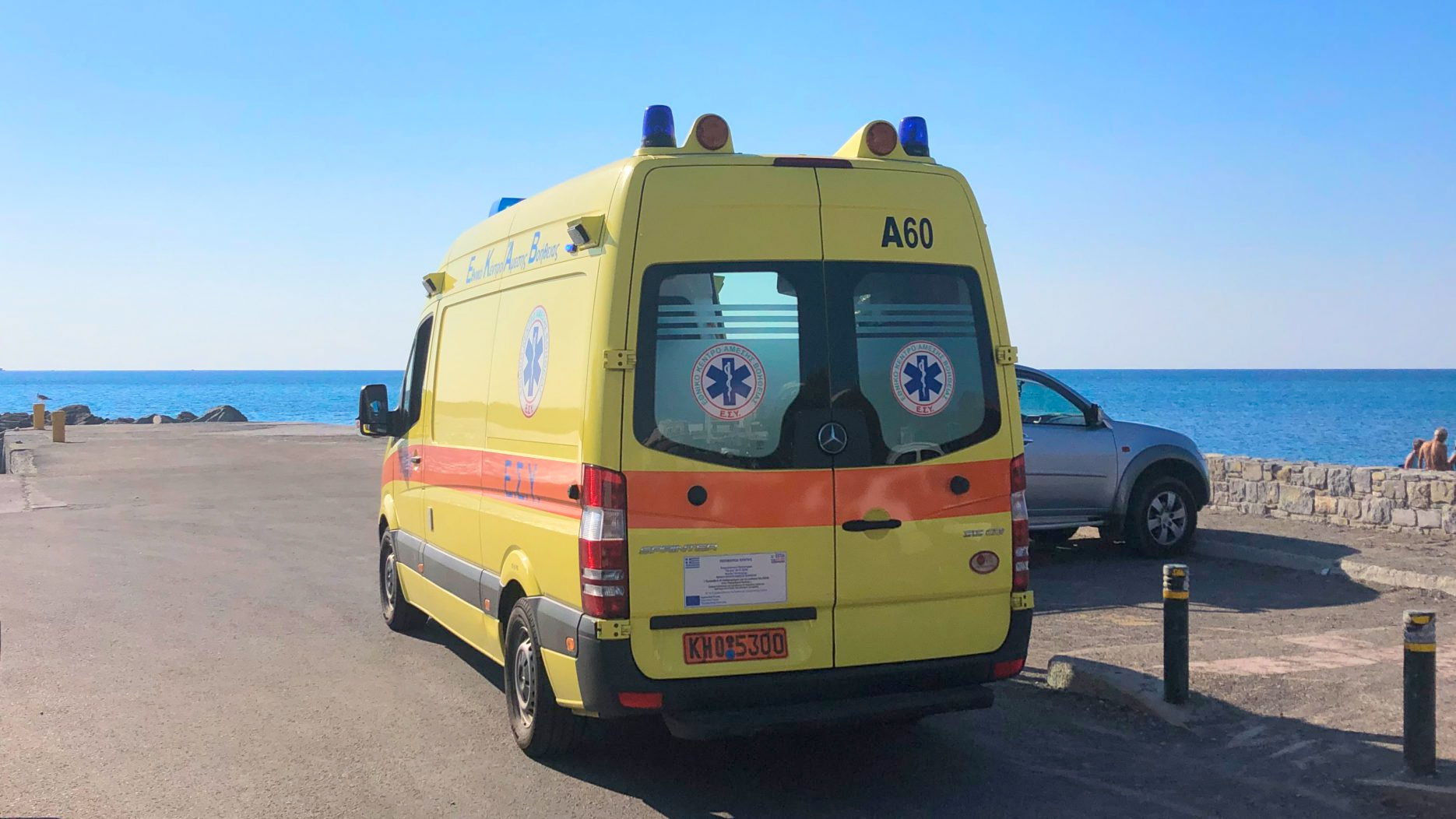
Health system in Crete – medical care on the island (German article)
Who does what in Greece? Developer, lawyer, notary, engineer—and you
This is where many international buyers misunderstand the process.
The developer:
Should provide approved plans, technical specifications (specs), a clear timeline, house rules (especially if it’s a complex), and a realistic management concept including ongoing cost assumptions.
Your lawyer / notary / engineer:
They are essential in the Greek purchase process. But they do not automatically replace your own risk management—especially around “will the complex work smoothly?”, “are rules enforceable?”, “do costs make sense?”, and “are technical details documented properly?”.
Practical framework:
Separate mandatory process steps (legal transfer, required certificates) from your buyer-level due diligence (how deep you want to verify risk).
If you want to check new build in Crete effectively, use a structured question list and require clear documentation.
Legal structure and permits: building legality, subdivision, encumbrances
Another key addition from the discussion: beyond technical issues and location, the legal structure must be clean.
Three areas to clarify early:
- planning and permits: is there a valid building permit and clear evidence the project fits the zoning / buildability rules?
- subdivision and allocation: is it documented exactly what belongs to your unit (storage, parking, terraces, garden rights, exclusive-use areas)?
- encumbrances and third-party rights: mortgages, easements, rights of way, restrictions—what exists, and how will it be cleared/handled before handover?
Note: These points are typically addressed through legal review and the transfer process—but you must actively ask and understand the outcome.
Crete new build checklist: 18 questions to compare projects and reduce risk
Use these questions with the developer, your lawyer/engineer, and (if available) the future management / property management team. The goal is not perfection. The goal is early clarity.
Block A: Soil and geotechnics (dealbreaker candidates)
- Is there a geotechnical study? Who produced it and for this exact project?
- What is the key conclusion for foundations, drainage and hillside runoff?
- Is the build on natural ground or engineered fill? If fill: how was it designed and compacted?
- Are there signs of hillside runoff / surface water risk (topography, retaining walls, vegetation patterns)?
- How are defects and warranties around foundations/ground conditions handled in the contract?
Block B: Water, drainage and waterproofing (extremes happen)
6) Where does water go in heavy rain—do you have a drainage plan and discharge logic?
7) How are terrace and flat-roof junctions waterproofed (layers, slopes, outlets)?
8) What is the installation standard for windows/doors (wind-driven rain, sealing system, detailing)?
9) If there is storage/garage: what protections exist against surface water ingress?
10) What is the snagging/defects process at handover (protocol, deadlines, remedies)?
Block C: Comfort beyond summer (winter usability)
11) Is there a real winter comfort solution (heating, dehumidification, insulation strategy)?
12) What is the energy setup (grid, solar/PV, hot water)—what is standard vs optional?
Block D: Complex management, house rules, running costs
13) How many co-owners, who manages the complex, and who is responsible for what (pool, gardens, repairs)?
14) What are the expected annual running costs (service charge) and how are reserve funds built? How are special contributions decided?
15) What are the house rules for use and rentals (quiet hours, pets, short lets, alterations)?
Block E: Legal structure (permits, subdivision, encumbrances)
16) Is there a valid building permit and clear documentation of zoning/buildability compliance?
17) How is the subdivision/allocation documented (unit boundaries, exclusive-use areas, storage, parking)?
18) What encumbrances or third-party rights exist (mortgages, easements, rights of way) and how will they be resolved before transfer?
Practical takeaway:
If you can only prioritise two areas, start with (1) soil/geotechnics and (2) management/rules/cost logic. Those are common sources of long-term frustration.
Common mistakes international buyers make
- “The ground will be fine” without documented evidence
- “We’ll clarify the rules later” (later is often too late)
- “Low service charge is great” (it can mean no reserve planning)
- “Turnkey means the same everywhere” (definitions vary—agree it in writing)
- “Permits will be sorted” without clear documentation of legality and subdivision
FAQ
Do I need a lawyer when buying property in Greece?
In practice, legal support is central. Your lawyer represents your interests.
Does the developer automatically provide all studies and documents?
Not always in the “international buyer format”. Ask specifically and ensure key elements are reflected in the contract and handover process.
Are pools and shared complexes a problem?
Not necessarily. The risk is unclear responsibilities, weak reserves, and house rules that are not practical or enforceable.
What is the main benefit of this checklist?
It saves time, reduces surprises, and lets you compare projects consistently. Most importantly, it helps you say “no” earlier—before you are emotionally or financially committed.
Further reading (KretaKompass)
Optional deep-dive for buyers who are ready to proceed (Stage 2)
If you are already in the decision phase and want a deeper process guide (documents, roles, timeline, common pitfalls), continue here:
How to buy a property in Greece (German article)






Recent Comments