Quick Summary
If you retire to Crete, your health insurance does not automatically disappear — but it does not organize itself either.
- If you receive a pension from Germany, Austria, or Switzerland, you usually remain insured in your home system.
- You must apply for the S1 form to transfer your healthcare entitlement to Greece.
- The EHIC card is only for temporary stays — not for permanent relocation.
- Long-term care planning is often overlooked but critical.
- Private insurance holders must clarify coverage before moving.
This guide explains how health insurance in Crete works for retirees — clearly and practically.
Mini-FAQ: Is the EHIC enough if I stay 5–7 months per year?
If you spend several months per year in Greece (e.g. “wintering”) but your main residence and insurance remain in your home country, people often rely on the EHIC in practice (often complemented by private travel health insurance).
Once you actually move your centre of life to Greece and want to be properly registered for regular care (doctors, prescriptions, planned treatments), the S1 + local registration route is often relevant for retirees.
Note: The frequently mentioned “183-day rule” is mainly a tax/residency concept and does not automatically settle health-insurance responsibility.
1. Who This Guide Is For
This article is written for:
- German retirees moving to Crete
- Austrian pensioners planning long-term relocation
- Swiss retirees considering permanent residence in Greece
- Couples relocating after retirement
- Property buyers who plan to live in Crete full-time
If you are still evaluating retirement life in Greece, you may also want to read:
2. The Core Principle: You Stay Insured – But You Must Activate It
Many retirees assume:
“It’s the EU — it will sort itself out.”
It does not.
Under EU coordination rules, pensioners receiving benefits from their home country can access healthcare in their country of residence — but only if they formally register their entitlement.
This is where the S1 form becomes essential.
3. The S1 Form: Your Key to Healthcare in Greece
If you are publicly insured (for example in the German statutory system):
Step 1 – Request the S1 Form
Contact your health insurance provider before moving and request the S1 document.
Step 2 – Register in Greece
After arrival, register the S1 with the Greek authorities.
This gives you access to the public healthcare system in Greece just like a local resident.
Important
Your European Health Insurance Card (EHIC) is NOT sufficient for permanent relocation. It is meant for temporary stays only.
What we see in practice in Greece: two common pathways (varies by region/office)
From real-life experience, there are two typical workflows — depending on the region and local office it can be more straightforward or more formal:
- Path A (straightforward): Request the S1 in your home country → appointment/office in Greece (often via e-EFKA or the local competent authority) → an (EU-)AMKA is issued/usable; confirmation from the home-country insurer may follow in the background.
- Path B (more formal): First EU registration/residency certificate + proof of address (e.g. rental contract or purchase contract) → then e-EFKA / (EU-)AMKA.
Key takeaway: Always ask the local office in advance which additional documents they require — in Greece this can differ from one area to another.
While the overall EU logic applies across Greece, the exact sequence and document requirements can vary by region and office.
4. What Healthcare Looks Like in Crete
Crete offers:
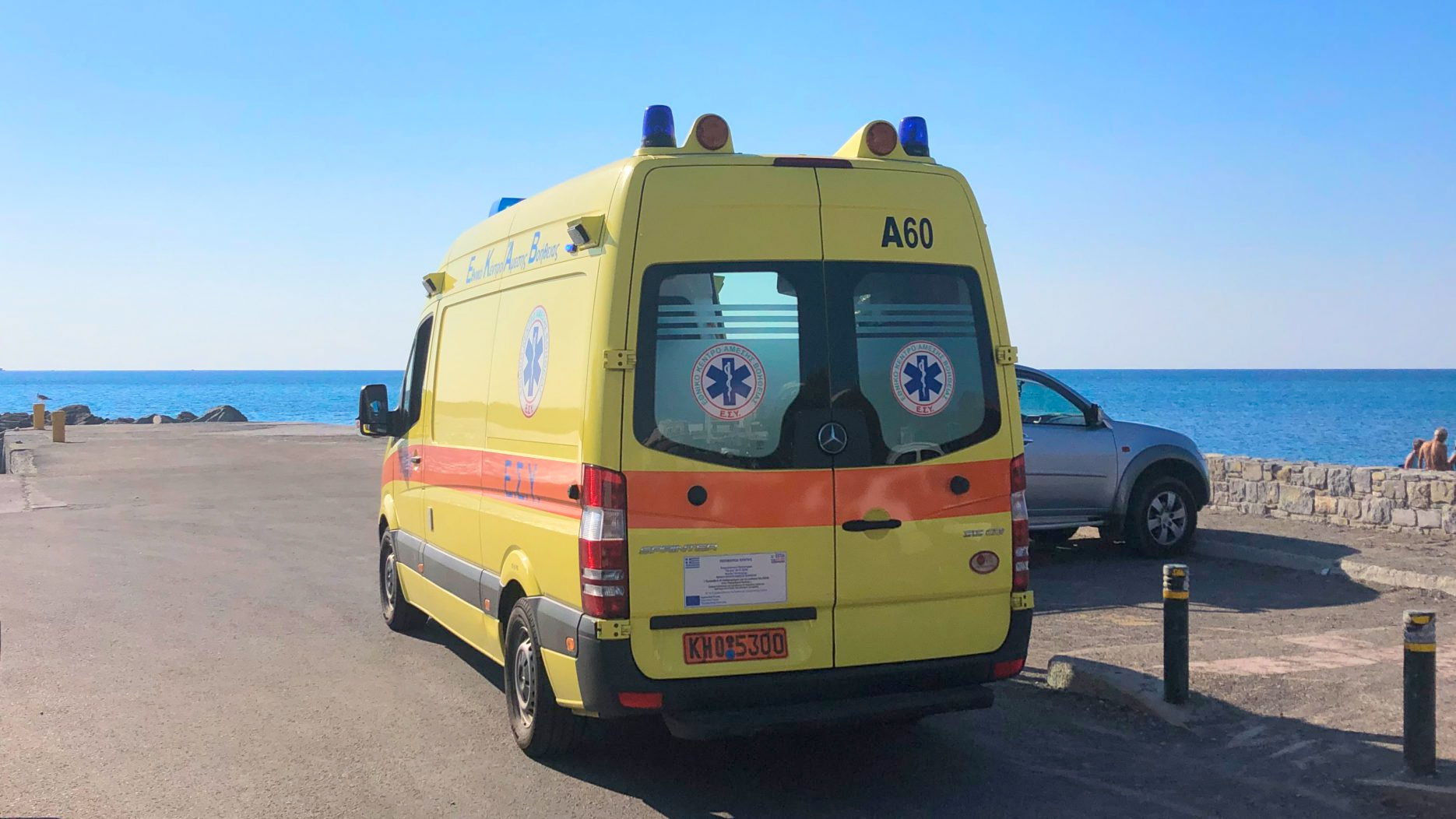
- Public hospitals in major cities
- Regional medical centers
- Private clinics in Heraklion and Chania
- A growing number of private specialists
However, the experience may differ from what retirees from DACH countries expect:
- Waiting times can vary
- Administrative processes can be slower
- Private services are widely used even by locals
For an in-depth overview, see:
5. Do You Pay Twice?
In standard retirement cases:
- Contributions continue to be deducted from your pension in your home country.
- You do not automatically pay into the Greek system as well.
However — and this is important — if you start working, become self-employed, or generate certain types of income in Greece, the situation can change.
This is one of the most common misunderstandings among retirees relocating to Crete.
6. The Overlooked Topic: Long-Term Care
Health insurance is one thing. Long-term care is another.
Many retirees do not consider this question early enough:
What happens if I need assistance at age 78?
Within the EU, certain care-related cash benefits may be exportable.
But in-kind services (such as structured nursing care like in Germany) are not automatically transferable.
In Crete, family support and private solutions often play a larger role.
If you plan long-term retirement in Greece, a realistic care strategy is essential.
7. If You Are Privately Insured
Private insurance requires careful planning.
You generally have three options:
- Keep your existing private insurance (if it allows permanent residence abroad).
- Switch to an international expat policy.
- Combine public entitlement (via S1) with private supplementary coverage.
Critical questions to clarify before moving:
- Does your policy allow permanent residence in Greece?
- Are hospital stays fully covered?
- What are reimbursement procedures?
- How will premiums develop after age 70?
Never cancel your existing coverage before receiving written confirmation of your future protection.
8. Step-by-Step Checklist for Retirees Moving to Crete
6–12 Months Before Moving
- Contact your health insurer about S1 eligibility.
- Clarify whether you plan any income-generating activity in Greece.
- Review long-term care implications.
1–3 Months Before Moving
- Request the S1 form.
- Prepare documentation.
- Research local healthcare access in your region of Crete.
After Arrival
- Register the S1.
- Establish contact with a local doctor.
- Organize a clear documentation folder (digital + physical).
- Clarify in advance whether EU registration/residency + proof of address is required before e-EFKA/(EU-)AMKA (requirements can vary locally).
- When arranging the appointment, ask specifically: “Which documents do you need in addition to the S1?”
Quick note: Depending on the region, you may be asked to complete EU registration/residency formalities and provide proof of address before e-EFKA/(EU-)AMKA can be processed. When booking the appointment, ask explicitly: “Which documents do you need in addition to the S1?”
9. Common Mistakes Retirees Make
- Relying only on EHIC
- Ignoring long-term care planning
- Assuming EU membership equals automatic healthcare access
- Canceling private insurance too early
- Underestimating the impact of small side-income activities
Conclusion: It’s Manageable — If You Plan Properly
Health insurance in Crete for retirees from Germany, Austria, or Switzerland is generally manageable.
But it requires:
- Proactive organization
- Clear documentation
- Realistic long-term thinking
The biggest risks are not legal barriers — but assumptions.








Recent Comments