
Water scarcity in Crete remains an important issue for residents, visitors and international property buyers. Heavy rainfall in spring 2026 improved the situation in several parts of the island, but during the summer some areas still experienced temporary shortages and technical problems affecting the water supply.
Parts of Heraklion as well as locations in eastern and south-eastern Crete were affected. In August, a technical problem at the Aposelemis water treatment plant temporarily reduced the supply to Heraklion, Hersonissos and Agios Nikolaos.
Updated: September 2026
Temporary restrictions and increased pressure on local water supplies were also reported in areas including Analipsi and Makry Gialos.
This highlights an important point: a well-filled reservoir does not automatically guarantee an uninterrupted water supply. Local distribution networks, storage capacity, groundwater levels, technical infrastructure and seasonal demand are equally important.
If you are considering buying a property in Crete, there is no reason to panic because of alarming headlines. However, the subject should not be ignored either.
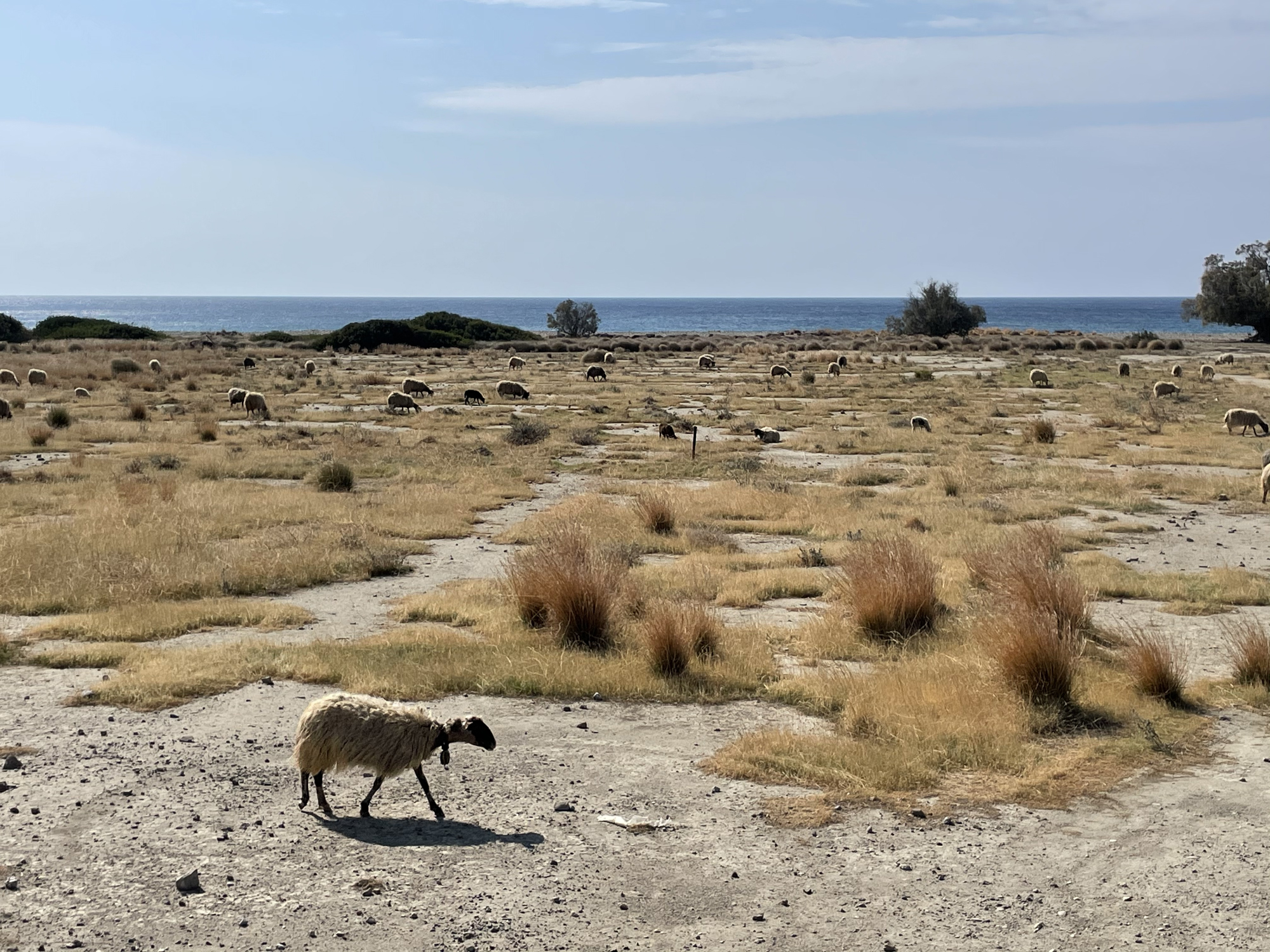
The short answer is: water scarcity in Crete is a real long-term issue, but its relevance for an individual property depends strongly on the specific location, municipality and technical water supply of the property.
Water Scarcity in Crete: What Is the Current Situation?
Crete has experienced repeated periods of low rainfall and prolonged drought in recent years. At the same time, water demand rises significantly during the summer months.
The main factors include:
- irrigation of agricultural land,
- higher seasonal demand caused by tourism and holiday homes,
- ageing water networks,
- regional differences in reservoirs and groundwater resources,
- changing rainfall patterns.
At the beginning of 2026, water levels in several reservoirs were under pressure. Significant rainfall during spring subsequently improved conditions in some parts of the island.
The Aposelemis reservoir, which plays an important role in supplying the greater Heraklion area and other regions, benefited from additional inflows.
However, the summer of 2026 demonstrated that good reservoir levels do not necessarily mean that water supply problems disappear. Technical failures, high seasonal consumption and local network issues can still create temporary restrictions.
For this reason, water scarcity in Crete is not simply a question of how much rain falls. Infrastructure, distribution and the local supply system are just as important.
Why Does Water Supply Vary So Much Across Crete?
Crete has substantial water resources overall. The challenge is that water is not available in the same quantity, at the same time or in the same place across the island.
Western Crete generally receives more rainfall, while many parts of eastern Crete are considerably drier.
However, even an area with relatively high rainfall can experience local water problems if the distribution network is outdated, storage is insufficient or demand rises sharply.
For international property buyers, this means that it is not enough to ask whether a house is located in western, eastern or southern Crete.
The more relevant questions are:
- Which network supplies the property?
- Is the connection official?
- Is there a storage tank?
- Has the area experienced pressure problems or interruptions?
- Does the property depend on a private well?
Water Scarcity in Crete and Irregular Rainfall
Most rainfall in Crete occurs during the winter months. Summers are usually very dry.
If several winters in succession bring insufficient rainfall, reservoirs and underground aquifers may not recover adequately.
One particularly wet winter can improve the situation temporarily, but it does not guarantee long-term water security.
Climate change adds another layer of uncertainty. European environmental authorities expect southern Europe in particular to face more frequent droughts, higher temperatures and reduced water availability in the future.
Water scarcity in Crete should therefore be understood as part of a broader Mediterranean challenge rather than merely a short-term seasonal problem.
Agriculture and Water Demand
Agriculture accounts for a significant share of water consumption in Crete.
Olive groves, vegetable farming, greenhouses and other crops require irrigation, particularly during the hottest months.
Agricultural regions such as:
- the Messara Plain,
- Viannos,
- parts of Lasithi,
- areas around Ierapetra
can be particularly sensitive to declining groundwater levels and restrictions on irrigation.
For a private property owner, this does not automatically mean that domestic drinking water will be cut off.
Agricultural irrigation water and municipal drinking water may come from different systems and sources.
Nevertheless, if you are considering a home in a heavily agricultural area, the local water supply deserves closer examination.
Tourism, Holiday Homes and Seasonal Water Consumption
The population of Crete increases significantly during the main tourist season.
Hotels, holiday villas, restaurants, swimming pools and landscaped gardens all increase water consumption at precisely the time when there is almost no rainfall.
Tourism is not the only cause of water scarcity.
Agriculture, leakage from old infrastructure, insufficient storage capacity, groundwater extraction and climate change all play important roles.
Even so, owners of holiday properties can reduce consumption through relatively simple measures:
- modern pool systems,
- water-efficient fixtures,
- drip irrigation,
- drought-resistant landscaping,
- regular checks for leaks.
This is particularly important for second homes and rental villas, where an unnoticed leak can continue for days or even weeks.
Ageing Infrastructure Can Intensify Water Scarcity
Not every water problem is caused by a lack of rainfall.
A portion of treated water can be lost before it reaches households because of ageing pipes, leaking connections and inefficient distribution systems.
This is not unique to Crete. It is a wider infrastructure challenge in many parts of Greece.
Authorities are increasingly investing in:
- replacing older water pipes,
- digital water metering,
- leak detection systems,
- new storage facilities,
- additional wells where appropriate,
- improved water distribution management.
These measures are important, but infrastructure upgrades take time.
For property buyers, the practical condition of the local network can therefore be just as important as regional water reserves.
Which Areas Are Most Affected by Water Scarcity in Crete?
Conditions can differ significantly even between neighbouring villages.
Factors that influence the situation include:
- rainfall,
- elevation,
- proximity to reservoirs,
- condition of the local network,
- number of connected homes,
- agricultural demand,
- groundwater reserves.
Eastern Crete and Lasithi
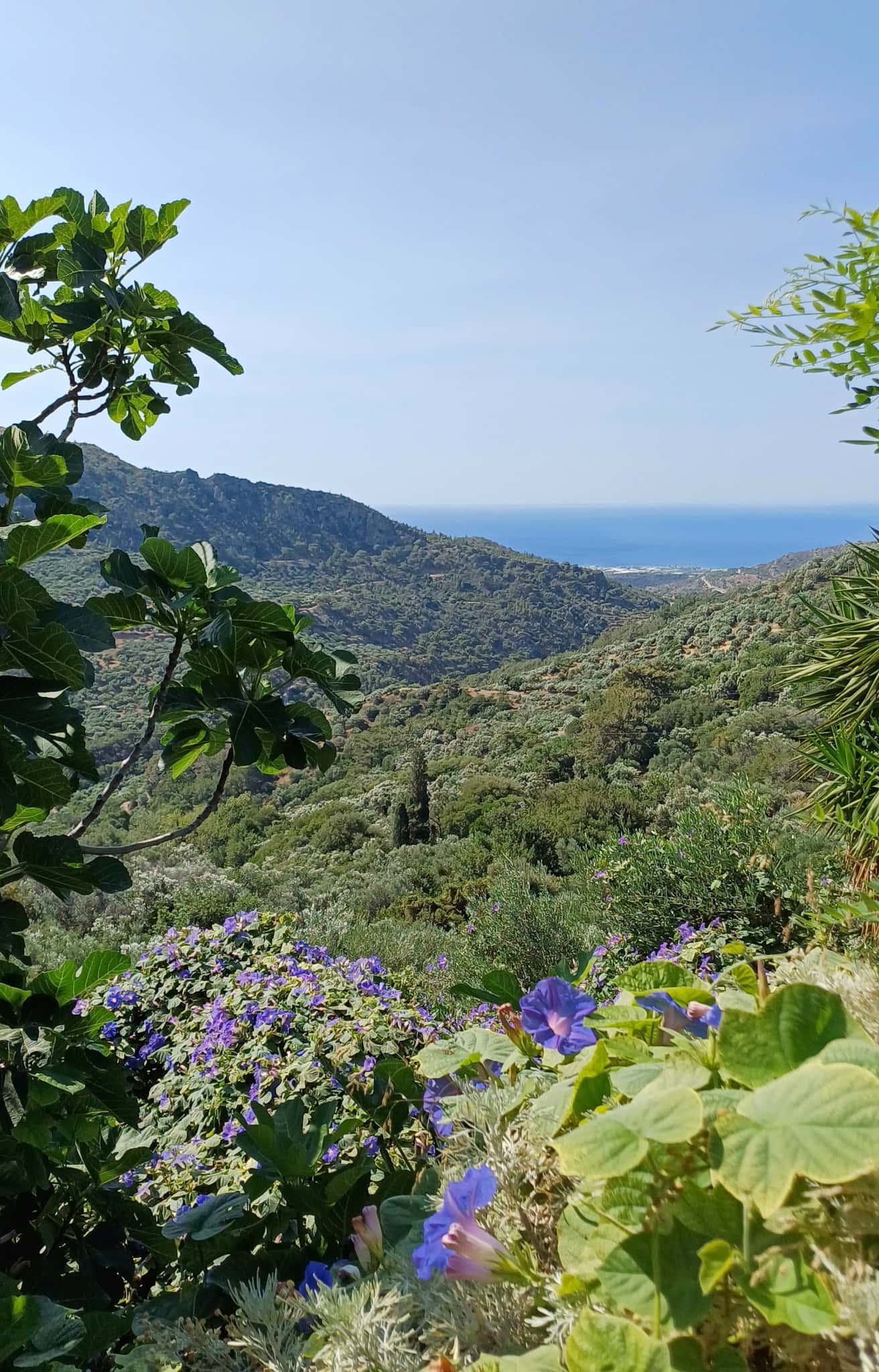
Eastern Crete is generally among the drier parts of the island.
Water scarcity and declining groundwater levels can be particularly relevant in parts of Lasithi, around Ierapetra and in areas with intensive agriculture.
Rainfall in spring 2026 provided some relief, but the region remains structurally sensitive because agriculture, tourism and private households all depend on limited resources.
This does not mean that buying property in eastern Crete is automatically problematic.
It does mean that the water supply of a specific property should be checked carefully.
Messara Plain and Southern Heraklion
The Messara Plain is one of Crete’s most important agricultural regions.
Low reservoir levels and intensive groundwater use can primarily affect irrigation in this area.
Depending on the municipality, restrictions or prioritisation may be introduced during periods of high demand.
For property buyers, it is important to establish whether a house has a normal municipal drinking water connection or relies partly on a well, agricultural supply line or private storage tank.
Heraklion and Hersonissos
The greater Heraklion area is supplied partly through the Aposelemis reservoir.
After water levels had been closely monitored, spring rainfall in 2026 significantly improved the situation.
The summer nevertheless showed that technical failures or network pressure can still affect supply.
Long-term water management therefore remains an important strategic issue for the region.
Western Crete
Western Crete generally receives more rainfall than many areas in the east.
However, this does not guarantee that every property has an excellent or uninterrupted water supply.
Local groundwater problems and supply difficulties have also been reported in parts of Chania and Rethymno.
For buyers, the lesson is simple: a location that looks water-rich on a map may still have very local infrastructure issues.
Does Water Scarcity in Crete Mean Regular Water Cuts?
For most property owners in established residential and tourist areas, prolonged complete water cuts are not part of everyday life.
However, during periods of very high demand, technical problems or severe drought, local issues may include:
- reduced water pressure,
- temporary interruptions,
- overnight supply restrictions,
- limits on garden irrigation,
- municipal requests to conserve water,
- restrictions on agricultural water use.
The level of risk depends heavily on the specific location.
A home connected to a well-maintained municipal network should be assessed differently from a remote property that depends partially or entirely on a private well.
What Should You Check Before Buying Property in Crete?
The water supply should form part of both the technical and legal due diligence when buying a property.
A statement such as “the property has water” is not sufficient, especially for detached houses and rural properties.
When purchasing a property in Crete, it makes sense to assess the water supply alongside ownership documents, planning permissions and construction quality.
Check the Municipal Water Connection
First establish whether the property is officially connected to the municipal drinking water network.
Useful questions include:
- Is the connection officially registered?
- Does the property have its own water meter?
- Are recent water bills available?
- Have there been interruptions during recent summers?
- Is water pressure sufficient during peak season?
- Are there any unpaid charges or unclear connections?
For older properties in particular, do not rely purely on verbal assurances.
Ask for documentation where possible.
Establish Where the Water Comes From
Not every house in Crete is supplied exclusively through a municipal network.
In rural areas you may encounter:
- private wells,
- shared boreholes,
- natural springs,
- cisterns,
- above-ground water tanks,
- agricultural water connections.
If a well or borehole is involved, its legal status should be checked.
You should also consider:
- registration or permits,
- extraction rights,
- water quality,
- long-term yield.
The physical existence of a borehole does not automatically mean that a buyer acquires an unrestricted or legally secure right to use it.
Check the Water Tank or Cistern
A storage tank can help bridge temporary interruptions and stabilise water pressure.
For this reason, many newer villas include an underground or above-ground storage tank as part of the original design.
Important points include:
- storage capacity,
- structural condition,
- cleanliness,
- how the tank is filled,
- pump system,
- pressure system,
- ease of maintenance,
- separation of potable and non-potable water.
A tank improves resilience.
It does not replace a reliable long-term water source.
Assess the Pool and Garden Realistically
A swimming pool and a large garden can significantly increase the water demand of a property.
A properly maintained modern pool should not need to be completely refilled on a regular basis.
Important considerations include:
- proper waterproofing,
- efficient filtration,
- pool covers,
- regular maintenance,
- reduced evaporation losses.
For landscaping, Mediterranean and drought-resistant plants are generally better suited to the local climate.
Examples include:
- olive trees,
- oleander,
- lavender,
- rosemary,
- bougainvillea,
- fig trees,
- carob trees.
Large lawns, tropical planting and inefficient sprinkler systems are usually less suitable for Crete from both an environmental and economic point of view.
Ask About Neighbourhood Experience
Local knowledge is extremely valuable.
Neighbours, property managers, local engineers and municipal water providers may be able to tell you whether a specific street or neighbourhood regularly experiences low pressure or interruptions.
This can be especially important in newly developed areas.
A water network that was adequate for a small village may come under pressure after dozens of new villas are added.
A property inspection in March or April may therefore not tell you what water pressure is like in August.
Can Rainwater Harvesting Help?
Collecting rainwater can be useful for:
- garden irrigation,
- cleaning,
- terraces and outdoor areas,
- potentially toilet flushing where technically permitted.
However, most rainfall occurs during winter, while peak consumption occurs in summer.
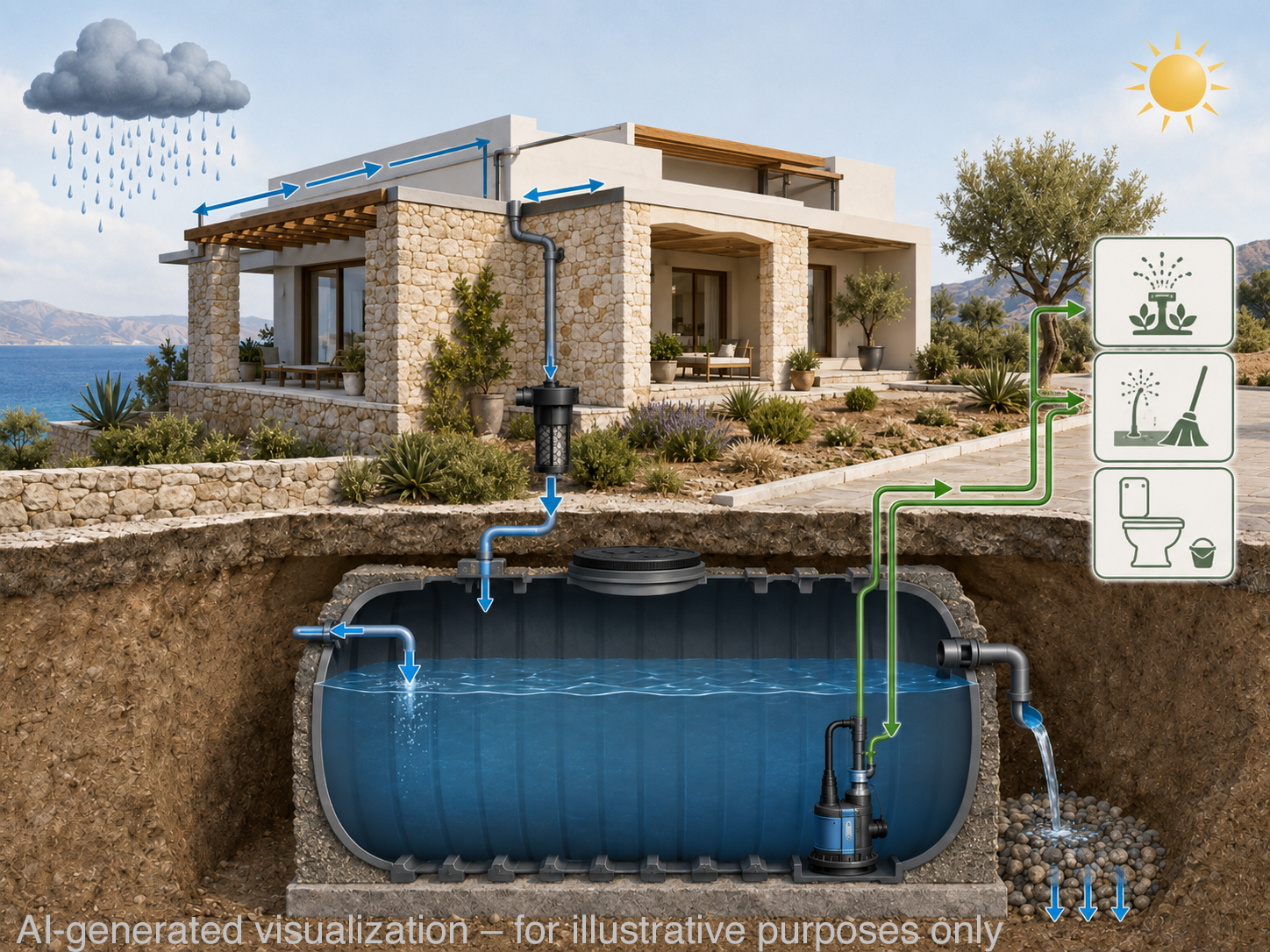
A rainwater system therefore only makes sense if:
- sufficient roof area is available,
- storage capacity is adequate,
- tanks are professionally designed,
- filters and overflow systems are included,
- the system is properly maintained.
For larger underground cisterns or structural alterations, a local civil engineer should confirm whether planning approval or other documentation is required.
Rainwater systems should also be properly separated from the municipal drinking water supply.
What Are the Authorities Doing About Water Scarcity in Crete?
Greece and the Region of Crete are pursuing various measures to improve long-term water resilience.
These include:
- upgrading water networks,
- reducing leakage,
- constructing and modernising storage facilities,
- drilling additional wells where appropriate,
- improving agricultural irrigation efficiency,
- reusing treated wastewater,
- local desalination,
- digital monitoring of consumption and networks.
The Region of Crete also participates in the European TRANSCEND research project, which focuses on strategies for adapting to water scarcity and climate change.
Such projects are important.
The more difficult challenge is implementation: replacing pipes, controlling unauthorised extraction and modernising irrigation systems on the ground.
Is Buying Property in Crete Risky Because of Water Scarcity?
Water scarcity in Crete is not a general argument against buying property on the island.
It is, however, a location and quality factor that should form part of your decision.
The greatest risk arises when buyers rely entirely on verbal statements and fail to investigate:
- the water connection,
- storage tanks,
- wells or boreholes,
- supply rights,
- local pressure and availability.
A well-designed property with:
- an official municipal connection,
- modern plumbing,
- adequate water storage,
- drought-resistant landscaping,
- efficient pool technology
is significantly better prepared for dry summers than a property with an unclear supply structure and very high water demand.
For new-build properties, water management should ideally be considered at the design stage.
This can include:
- storage capacity,
- pressure systems,
- landscape planning,
- pool technology,
- rainwater harvesting,
- separate non-potable water systems.

Our View on Water Scarcity in Crete
Water is likely to become an increasingly important issue in Crete over the coming years.
At the same time, it would be misleading to interpret individual drought reports as evidence that the island is facing permanent or universal water shortages.
Conditions vary significantly by location, season and infrastructure.
A wet winter can improve reservoir levels considerably. Several dry years can reverse that situation just as quickly.
For international property buyers, the practical conclusion is therefore not to avoid Crete altogether.
The more important point is to investigate the water supply of a specific property with the same care as planning permissions, ownership documents and construction quality.
At Kaste Immobilien, we work with local engineers, lawyers and other specialists when advising clients and presenting properties in Crete.
Depending on the property, this can help establish at an early stage:
- how the water supply is organised,
- whether the connection is officially documented,
- whether additional storage is available,
- which technical solutions may be appropriate.
Frequently Asked Questions About Water Scarcity in Crete
Does Crete have enough drinking water in 2026?
There is no single answer for the entire island.
Rainfall in spring 2026 improved conditions in several regions. In other areas, groundwater resources, agricultural demand and local infrastructure remain under pressure.
Which areas of Crete are most affected by water scarcity?
In recent years, eastern Crete, Lasithi, Viannos and the Messara Plain have been among the areas experiencing greater pressure.
Local issues can also occur in western Crete.
Are there regular water cuts in Crete?
Permanent or island-wide water cuts are not the norm.
Temporary interruptions or reduced pressure can occur locally during periods of high demand, drought or technical problems.
Is a water tank necessary for a house in Crete?
Not in every case, but it can provide valuable additional security.
It is particularly worth considering for detached houses, elevated properties and areas where water pressure may fluctuate.
Can you collect rainwater in Crete?
Rainwater harvesting is used in practice and can be useful.
For larger permanent systems, buyers or owners should obtain local technical advice regarding planning, installation and separation from the drinking water network.
Can a property in Crete rely on its own well?
Private wells and boreholes do exist.
However, buyers should verify:
- whether the installation is legally registered,
- what extraction rights apply,
- whether the source is reliable,
- whether the water quality is suitable.
Should you avoid buying a property with a pool because of water scarcity?
Not necessarily.
A properly built and efficiently operated pool can be manageable, but its size, evaporation losses, possible leaks and any local restrictions should be considered.
Conclusion: Take Water Scarcity in Crete Seriously, but Assess It Property by Property
Water scarcity in Crete is neither a temporary media story nor an acute crisis everywhere on the island.
It is a long-term challenge with significant regional differences.
As a property buyer, you should neither be unnecessarily alarmed nor dismiss the issue.
The most reliable approach is to investigate the individual property, including:
- its water connection,
- the local supply network,
- existing storage tanks,
- wells or boreholes,
- the water demand of the pool and garden.
This provides a far more useful picture than general headlines about drought in Greece.
If you are considering buying a property in Crete, Kaste Immobilien can help coordinate these questions with our local partners as part of the wider property assessment, including water supply, technical infrastructure, tanks, wells and possible storage solutions.
Please note: Water availability can change at short notice because of rainfall, seasonal consumption, technical faults and municipal measures. This article reflects the situation as of September 2026 and does not replace technical or legal due diligence for a specific property.
new articles from KretaKompass:
-
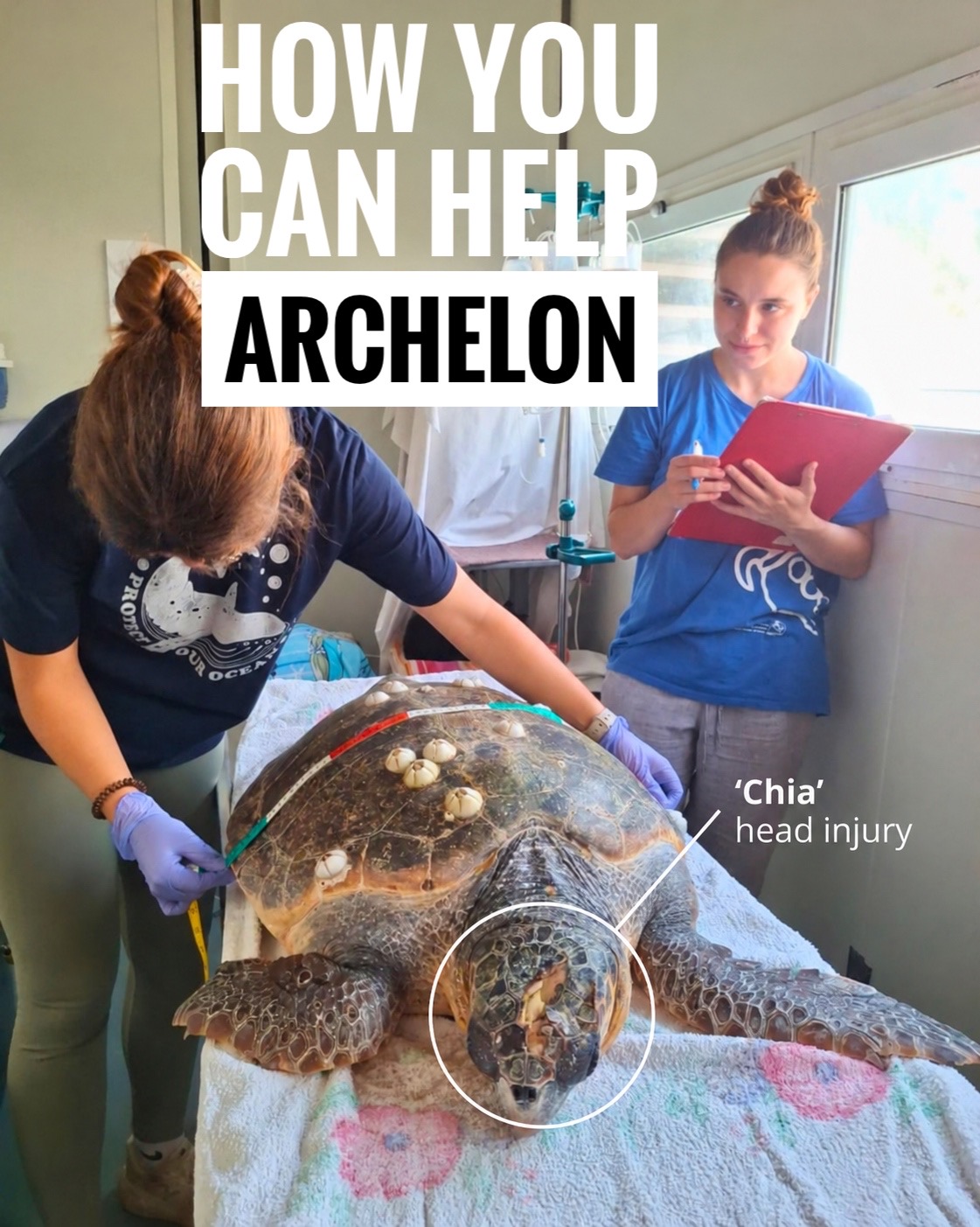
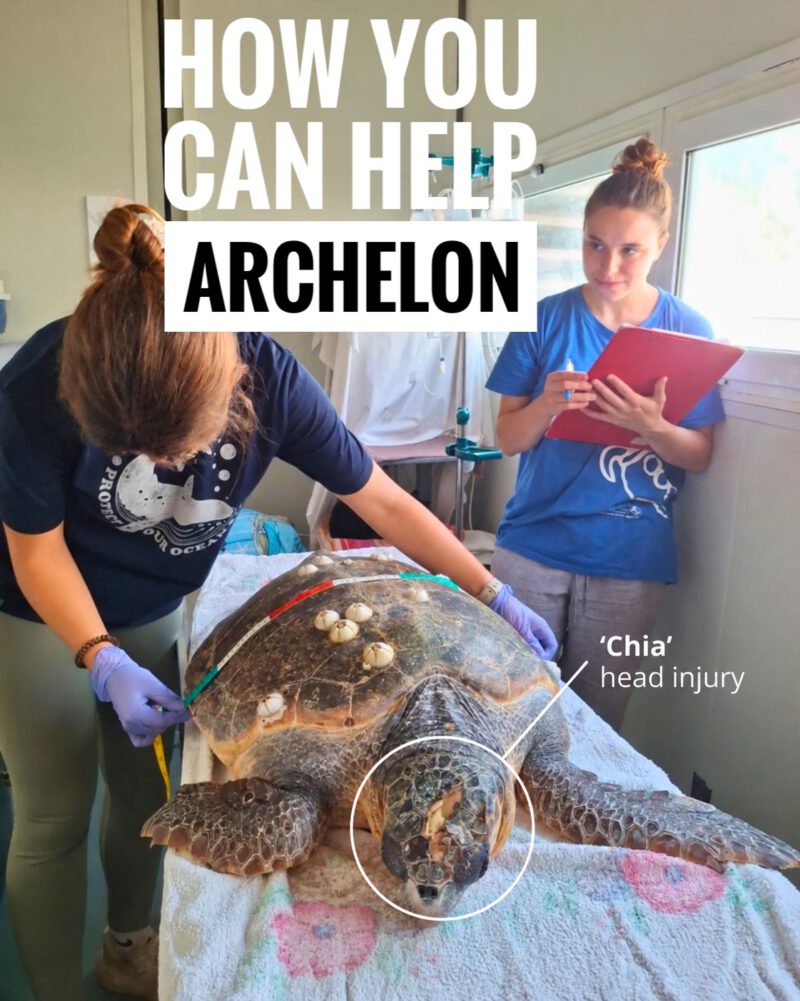
Sea Turtles in Crete: How You Can Help ARCHELON
Unseren Beitrag Teilen: Protecting sea turtles in Crete starts with responsible behaviour on the beach. But injured turtles need help too. Through its October 2026 campaign, ARCHELON is raising funds for patients at its Sea Turtle Rescue Centre near Athens. Here is how its work connects to Crete—and how you can support it, wherever you…
-
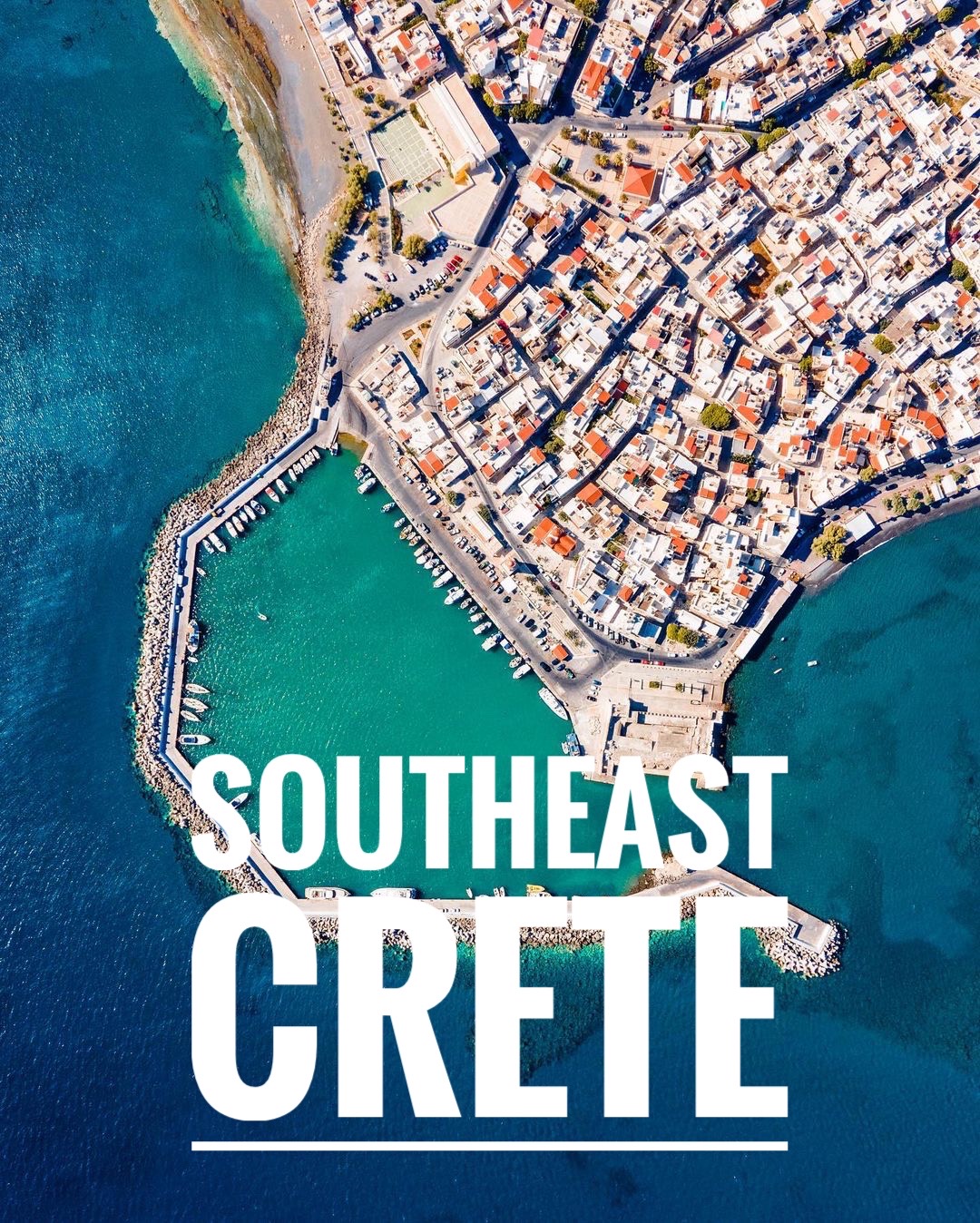
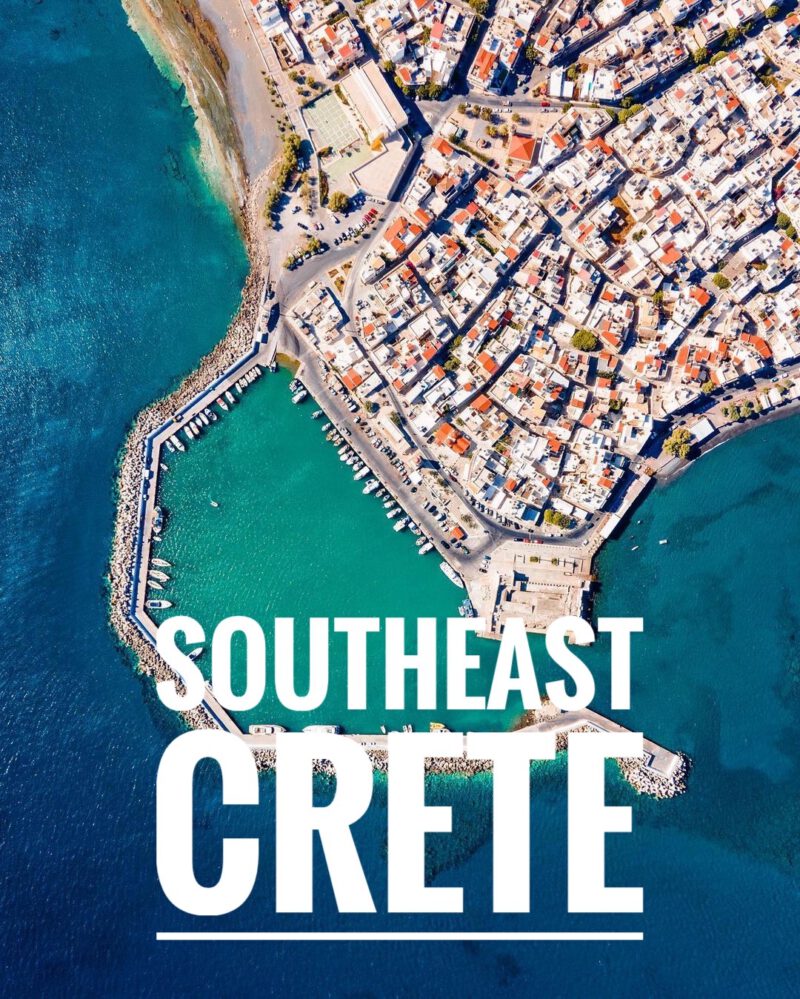
Southeast Crete: Ierapetra and Makrigialos
Unseren Beitrag Teilen: Southeast Crete at a glance Why visit southeast Crete? Crete is often introduced through Chania, Rethymno and the celebrated beaches of the west. Travel to the southeast and the island takes on a different character. Much of the landscape looks drier and more rugged. Along the coast, holiday villages sit close to…
-
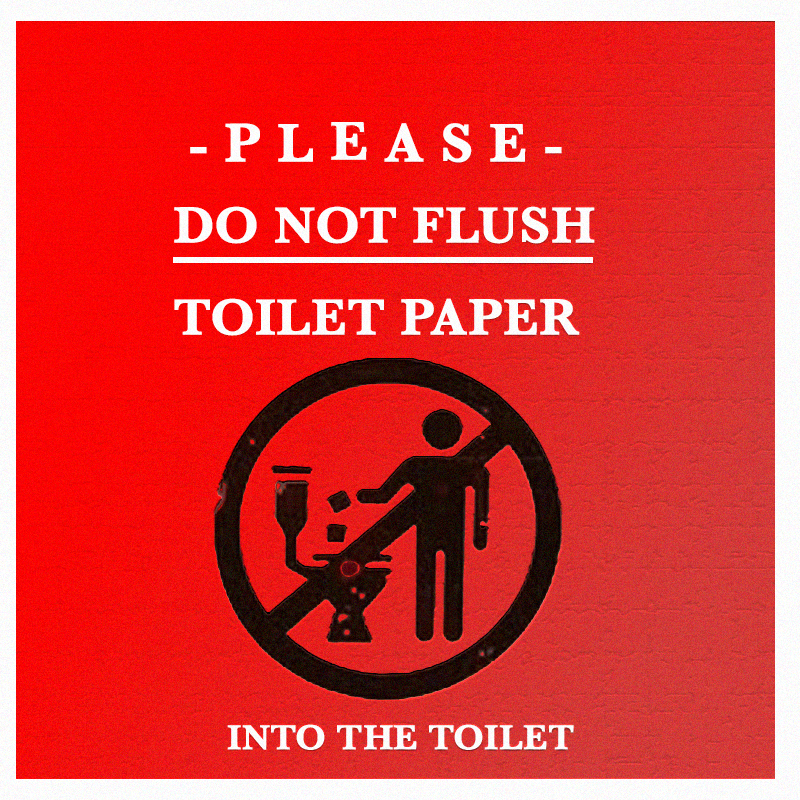
Toilet Paper in Greece: Rules, Reasons and Practical Solutions
Unseren Beitrag Teilen: Can you flush toilet paper in Greece? Sometimes, but you should never assume that you can. In many bathrooms on Crete and elsewhere in Greece, a sign asks guests to place used toilet paper in the bin beside the toilet. If you see that instruction, follow it. If there is no sign…
Sources and Further Reading
European Environment Agency – Water Scarcity Conditions in Europe
European Environment Agency.
Overview of water scarcity, water stress and long-term trends in Europe.
https://www.eea.europa.eu/en/analysis/indicators/use-of-freshwater-resources-in-europe-1
European Environment Agency – Water and Climate Impacts
European Environment Agency.
Information on the effects of climate change on water resources, particularly in southern Europe.
https://www.eea.europa.eu/en/europe-environment-2025/thematic-briefings/biodiversity-and-ecosystems/water-and-climate-impacts
European Environment Agency – Europe’s State of Water 2024
European Environment Agency.
European overview of water resources, climate impacts and sustainable water management.
https://www.eea.europa.eu/en/analysis/publications/europes-state-of-water-2024
Region of Crete – European Research Project TRANSCEND
Region of Crete.
Information about the European research programme addressing water scarcity and climate adaptation in Crete.
https://www.crete.gov.gr/eyropaiko-ergo-transcend/
Region of Crete – Water Awareness Event Under the TRANSCEND Project
Region of Crete, May 2026.
Regional information on water management, sustainability and adaptation to water scarcity.
https://www.crete.gov.gr/enimerosi-gia-to-nero-sto-gymnasio-pompias-sto-plaisio-toy-ereynitikoy-ergoy-transcend/
Hellenic Ministry of National Economy and Finance – Annual Progress Report 2026
April 2026.
Information on investment in drinking water infrastructure and measures to reduce water losses.
https://minfin.gov.gr/wp-content/uploads/2026/04/Greece_Annual_Progress_Report_2026_final.pdf
Kathimerini – Island Rainfall Brings Relief, Not Recovery
June 2026.
Current assessment of rainfall, temporary improvement and the continuing structural challenges facing water supply on Greek islands.
https://www.ekathimerini.com/news/environment/1306957/island-rainfall-brings-relief-not-recovery/
Region of Crete – Irrigation Bulletins 2026
Region of Crete.
Current information regarding irrigation and water use in Heraklion, Lasithi, Rethymno and Chania.
https://www.crete.gov.gr/category/anakoinoseis/enimerosi-agroton/nea-agroton/deltia-ardeysis-2026/
Source note: Reservoir levels, groundwater conditions and local restrictions can change within weeks or months. For any specific property, current information should also be obtained from the relevant municipality, local water supplier and a qualified local engineer.




1 Comment
Add Yours →[…] Water Scarcity in Crete: How Secure Is the Water Supply for Property Owners? […]