
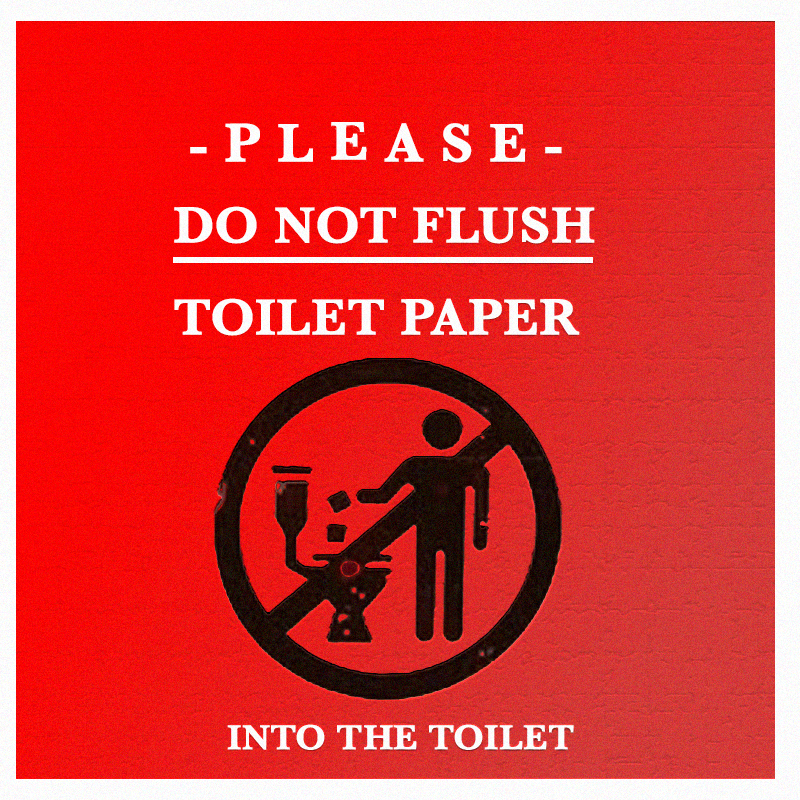
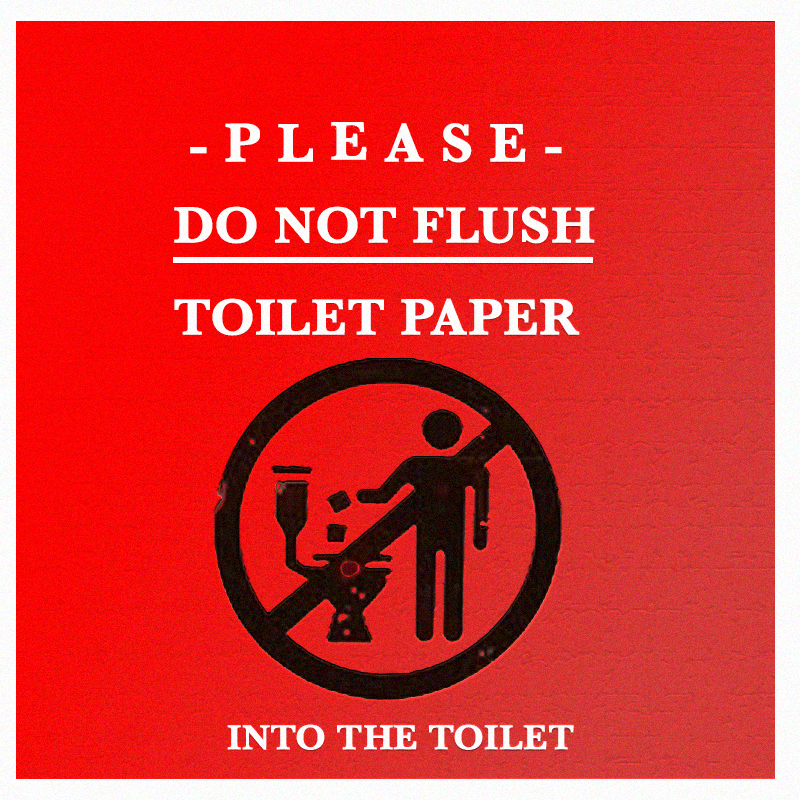
Can you flush toilet paper in Greece? Sometimes, but you should never assume that you can. In many bathrooms on Crete and elsewhere in Greece, a sign asks guests to place used toilet paper in the bin beside the toilet. If you see that instruction, follow it. If there is no sign and you are unsure, ask your host.
For first-time visitors, this may take some getting used to. It does not mean that a bathroom is unhygienic or that a property is of poor quality. The same practice can apply to a carefully maintained hotel, a modern holiday home or a high-end villa. What matters is the plumbing and wastewater arrangement of the particular building.
The quick answer
- There is a “do not flush toilet paper” sign: Put used paper in the bin provided.
- There is no clear instruction: Ask the owner, host or accommodation staff.
- Wet wipes and other hygiene products: Do not flush them.
- You own or plan to buy a property on Crete: Find out how its wastewater system works and what maintenance it requires.
Why is toilet paper in Greece often placed in a bin?
Wastewater arrangements vary from one property to another. Some buildings are connected to a public sewer. Others use an on-site system, particularly in areas where a public connection is unavailable. The condition and layout of the pipes inside the property matter too.
The rule for toilet paper in Greece depends on the plumbing and wastewater system of the particular property.
This is why there is no reliable answer based solely on a building’s age, price or location. It is also too simple to say that every Greek pipe is too narrow, or that every property with a septic system must keep toilet paper out of the toilet. The instruction in the bathroom applies to that particular property.
Is an on-site wastewater system a problem?
No. An on-site system is an established way to manage wastewater and is used in many parts of the world. It may be the appropriate solution for a villa or small development without access to a public sewer. Even expensive properties on Crete can have their own system.
These systems are not all the same. Terms such as septic tank, cesspit and holding tank are sometimes used loosely in conversation, although they describe different arrangements. A properly designed and maintained system can work well, but its exact type, capacity and maintenance needs should be checked for each property.
A septic system does not, by itself, prove that ordinary toilet paper cannot be flushed. Equally, the presence of a modern toilet does not prove that it can. Guests should follow the house rules; owners should know the specifications of their own installation.
What happens if you flush paper despite the sign?
If the property asks you not to flush paper, repeatedly doing so may contribute to a blockage or cause problems elsewhere in its wastewater system. The precise risk depends on the installation. One accidental piece of paper does not automatically mean an emergency, but the simplest way to avoid trouble is to follow the instruction.
Place used paper in the lined bin beside the toilet. A bin with a lid and regular emptying make this a straightforward routine. Wet wipes, paper towels, sanitary products and similar items should also stay out of the toilet. A product labelled “flushable” is not a reason to ignore the house rules.

A different routine, not a judgement on quality
Bathroom habits are shaped by local infrastructure and custom. In parts of the world, using a bin for toilet paper is entirely ordinary. Visitors may find it unfamiliar, but unfamiliar does not mean inferior.
Good accommodation makes the process clear and comfortable. Guests should have an appropriate bin and simple instructions before or during their stay. At Kaste Holidays, we include practical information about our Crete accommodation in the digital guest guide. If a guest is unsure about a particular bathroom, the local team can clarify the rule for that property.
Can a bidet or shower toilet help?
A bidet or shower toilet cleans with water and may reduce the amount of toilet paper a person uses. Some shower toilets also have a drying function. For owners planning a new bathroom or renovation, this can be an appealing comfort feature.
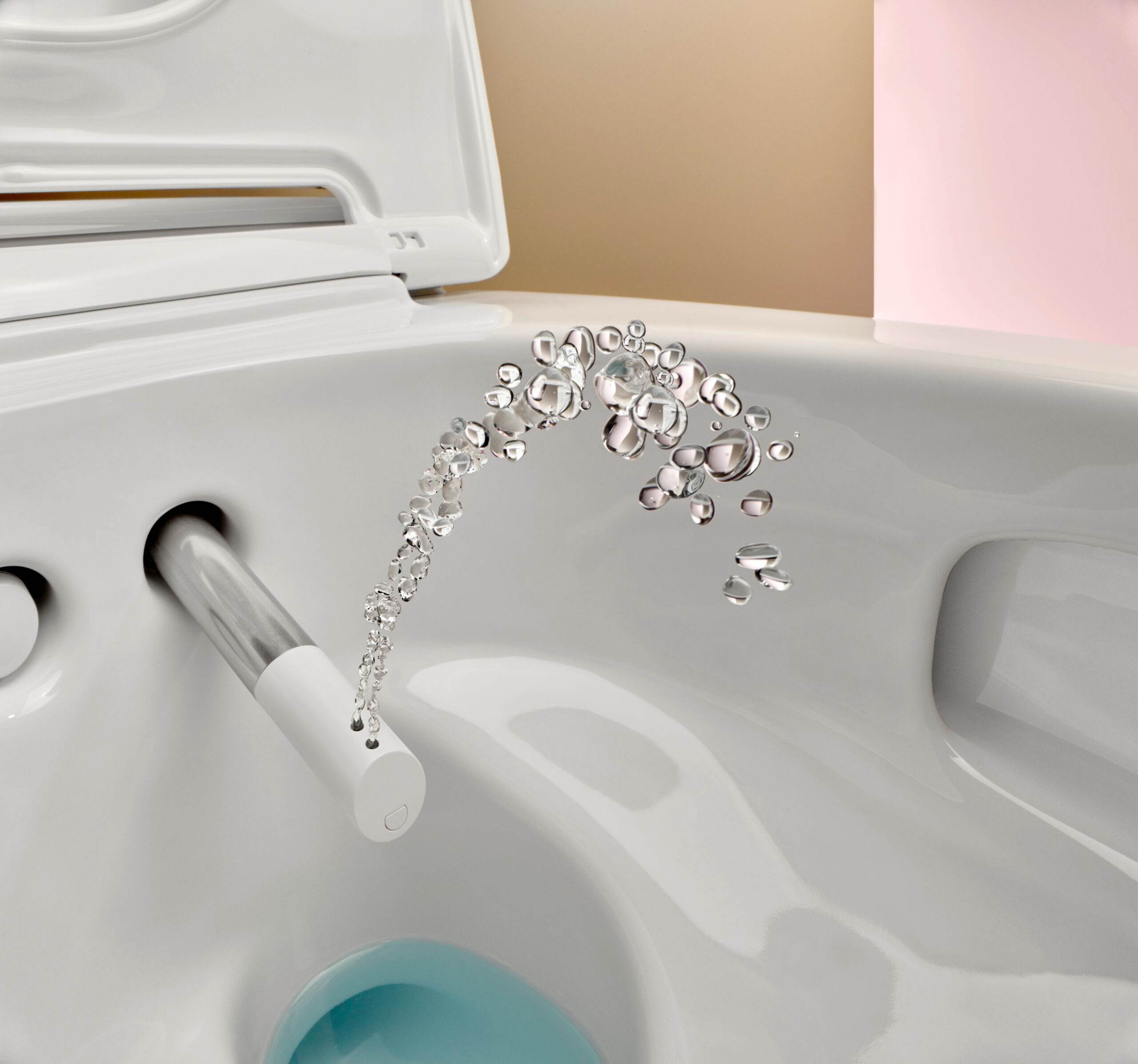
A shower toilet is an additional option, not a substitute for a suitable wastewater system. It would also be misleading to promise that every user will stop using paper entirely or that a particular device will always save money or resources. Those outcomes depend on the model and how it is used.
What should property buyers on Crete ask?
Wastewater disposal is a practical part of understanding a property, whether you are buying a holiday apartment, an existing house or a newly built villa. Before purchase, ask:
- Is the property connected to a public sewer?
- If it has an on-site system, what type of system is installed?
- What records are available for its installation, maintenance and emptying?
- Does its capacity suit the intended number of residents or holiday guests?
- What instructions should residents and guests follow?
Kaste Immobilien helps buyers raise these questions and obtain the available property information. A qualified local professional should assess the technical condition and suitability of the actual system. You can explore properties for sale on Crete with Kaste Immobilien, or get to know the island as a guest through Kaste Holidays.

Frequently asked questions
Can you flush toilet paper in Greece?
It depends on the specific bathroom. If a sign tells you not to flush paper, put it in the bin. Ask the host if no instruction is available.
Is the rule the same everywhere on Crete?
No. Wastewater systems and house rules vary between properties. Follow the instruction given at your accommodation.
Does a toilet-paper bin mean the villa is low quality?
No. High-end villas can also use on-site wastewater systems and ask guests to put paper in a bin. The bin alone tells you nothing about the quality of the property.
Does a septic tank always mean toilet paper cannot be flushed?
No. Whether paper can be flushed depends on the full installation and its operating instructions, not simply on the name of the wastewater system.
What should I do with wet wipes?
Put them in the bin, along with other hygiene products. Do not rely on a “flushable” label when using an unfamiliar bathroom.
What if I accidentally flushed some paper?
There is no need to assume that you have caused damage. Follow the bathroom instructions from then on. If the toilet drains slowly, backs up or otherwise seems blocked, contact your host promptly.







Recent Comments